
Crew-12 Launch Target Shifts as NASA, SpaceX Watch Abort Weather; Teams Say Vehicles and Crew Are Ready
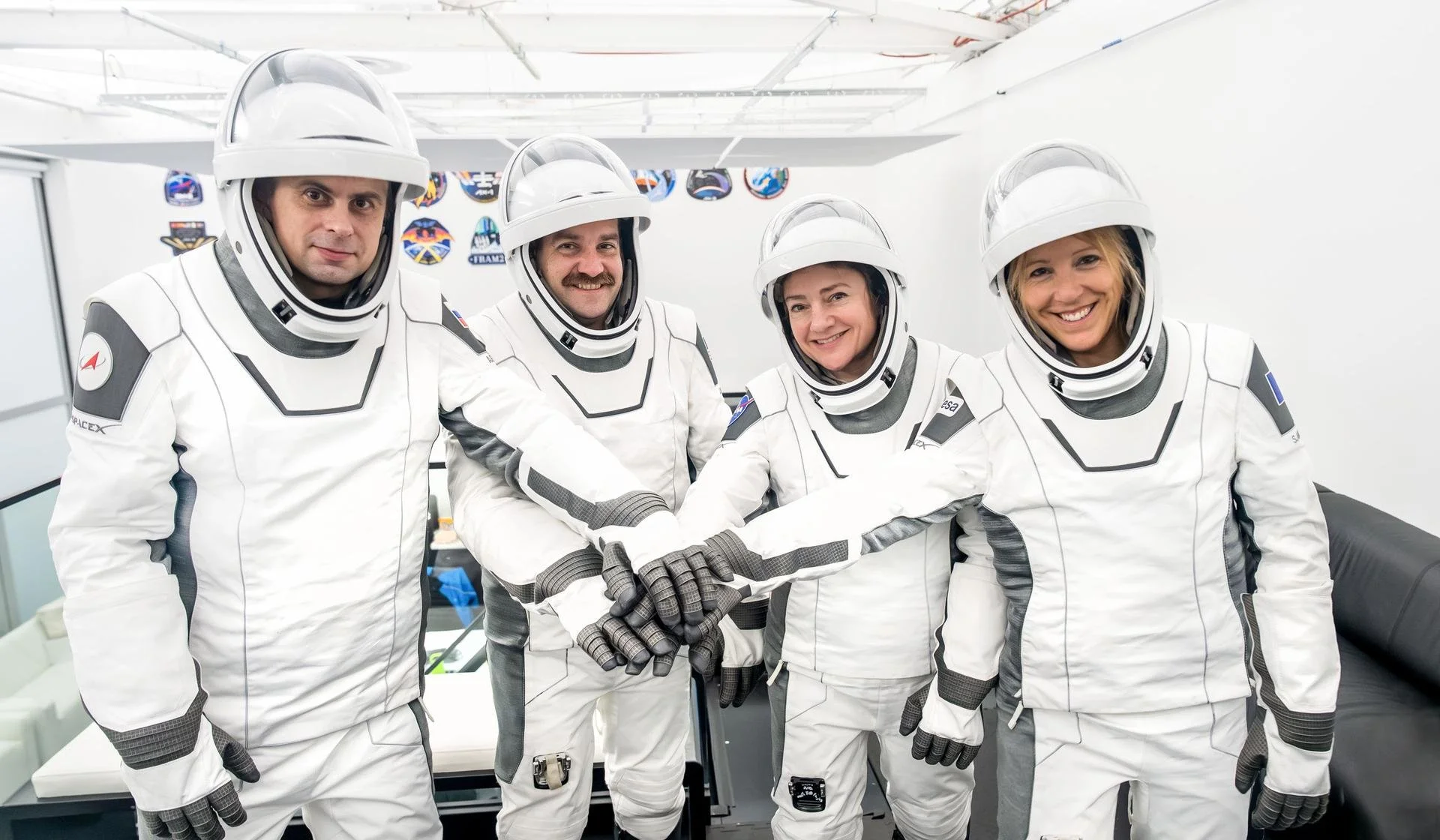
Photo Credit: SpaceX
KENNEDY SPACE CENTER, Fla. (February 9th, 2026) — NASA and SpaceX have adjusted the next launch attempt for Crew-12 to the International Space Station after unfavorable abort weather along the ascent corridor prompted a scrub, despite otherwise favorable conditions at Kennedy Space Center.
During a prelaunch news conference at NASA’s Kennedy Space Center, Commercial Crew Program Manager Steve Stich said the decision was driven by high winds along portions of the East Coast where Dragon could be required to abort and land safely.
“Launch site weather looks very favorable… but we have abort weather up the East Coast,” Stich explained, noting wind forecasts in higher-risk areas along the track were trending 24–28 knots due to a low-pressure system. As a result, teams moved the mission to no earlier than Thursday, Feb. 12, with a targeted 5:30 a.m. EST liftoff time, while emphasizing daily reassessments could continue through the week.
Crew-12 will fly a SpaceX Falcon 9 rocket and Dragon spacecraft from Space Launch Complex 40 at Cape Canaveral Space Force Station. The crew includes NASA astronauts Jessica Meir and Jack Hathaway, ESA astronaut Sophie Adenot and Roscosmos cosmonaut Andrey Fedyaev.
Flight Readiness: “Clean” Reviews and a Full-Duration Static Fire
Stich said the mission cleared an agency Flight Readiness Review (FRR) on Friday and that recent processing milestones have gone smoothly. The Falcon 9 completed a full-duration static fire early Sunday, with teams reporting no off-nominal engine performance.
SpaceX Vice President of Build and Flight Reliability William Gerstenmaier said a single check valve in a transfer tube appeared sluggish during testing and was replaced as a precaution. SpaceX also inspected the associated line and observed moisture that may have contributed to the issue through possible ice formation.
“We go above and beyond to make sure everything is ready,” Gerstenmaier said, adding that the crew dry dress rehearsal at the pad went “extremely smooth.”
Stich also noted NASA and SpaceX adjusted the static-fire timing to reduce the likelihood of exhaust plume effects on Dragon, referencing soot deposition seen on a previous mission when winds pushed plume back toward the spacecraft.
Minor Ground-System Issue Resolved During Crew Walkthrough
Early Tuesday, teams conducted an end-to-end crew ingress demonstration, including suiting and strapping in. Stich said a ground-server communications issue briefly disrupted comms between the ground team and Dragon but was resolved by switching to a backup server.
“The vehicles are ready, the crew’s ready, the ground systems are ready,” Stich said. “We just have to watch the weather.”
ISS Program: No Urgent Station Need, But Crew-12 Adds Capability
NASA ISS Deputy Program Manager Dana Weigel said the station is not facing major issues that require immediate crew arrival, giving managers flexibility to wait for better conditions.
“We’re not tracking any major issues… and we’ve closed out all of our open work,” Weigel said. “There’s really not an urgent need to get Crew-12 up there… we’ll launch when we’re ready.”
Weigel highlighted upcoming research and operations, including investigations involving plant micronutrients for future food production, protein crystal growth experiments with pharmaceutical relevance, and studies of pneumonia-causing bacteria and potential impacts on heart tissue.
The ISS schedule in the coming months includes multiple visiting vehicles, with milestones discussed ranging from cargo departures and robotic releases to future traffic planning into April.
ESA: New Astronaut Class Milestone and Exploration-Focused Tech
ESA astronaut and human exploration group leader Andreas Mogensen emphasized the significance of Sophie Adenot’s flight, describing her as the first astronaut from ESA’s 2022 selection class to reach the ISS.
Mogensen also highlighted technology demonstrations intended to support future exploration missions, including a compact multi-mode exercise device designed for smaller spacecraft environments, a health monitoring application, and a new ultrasound system using augmented reality and artificial intelligence to reduce reliance on ground guidance—capabilities especially relevant for deep-space missions where communications delays would complicate real-time support.
Range Coordination: Vulcan Launch and Artemis Work Tracked
Stich said range coordination is ongoing with other users, including a ULA Vulcan mission for the U.S. Space Force targeted in the same timeframe. He said Crew-12 currently holds priority, but NASA and SpaceX could adjust if weather limits the crew launch opportunity.
NASA is also maintaining regular coordination with Artemis teams at nearby Kennedy Space Center facilities, though Stich said no conflicts were expected this week.
Backup Opportunities Extend Into Mid-February
If weather prevents a Thursday launch, NASA outlined additional opportunities including Friday, Feb. 13 (5:15 a.m. EST) and subsequent windows through Feb. 15–17, with certain days requiring longer rendezvous “phasing” profiles that increase time before docking.
Looking Ahead: Starliner Status and Post-ISS Planning
The briefing also touched on Boeing’s Starliner, with Stich stating a no-earlier-than April target remains in place for an upcoming cargo mission, dependent on completion of technical work and review of ongoing testing and modeling.
On the longer horizon, NASA and SpaceX discussed preparations for operations with future commercial space stations, including how communications and approach/docking data exchange—capabilities currently supported by the ISS—may evolve, with SpaceX noting continued demonstrations of advanced communications approaches on Dragon.
Crew-12 remains targeted for launch no earlier than Thursday, Feb. 12, pending weather and range readiness.