
A Moment of Renewal at the Launch Pad — Artemis II Signals a New Chapter in Human Spaceflight
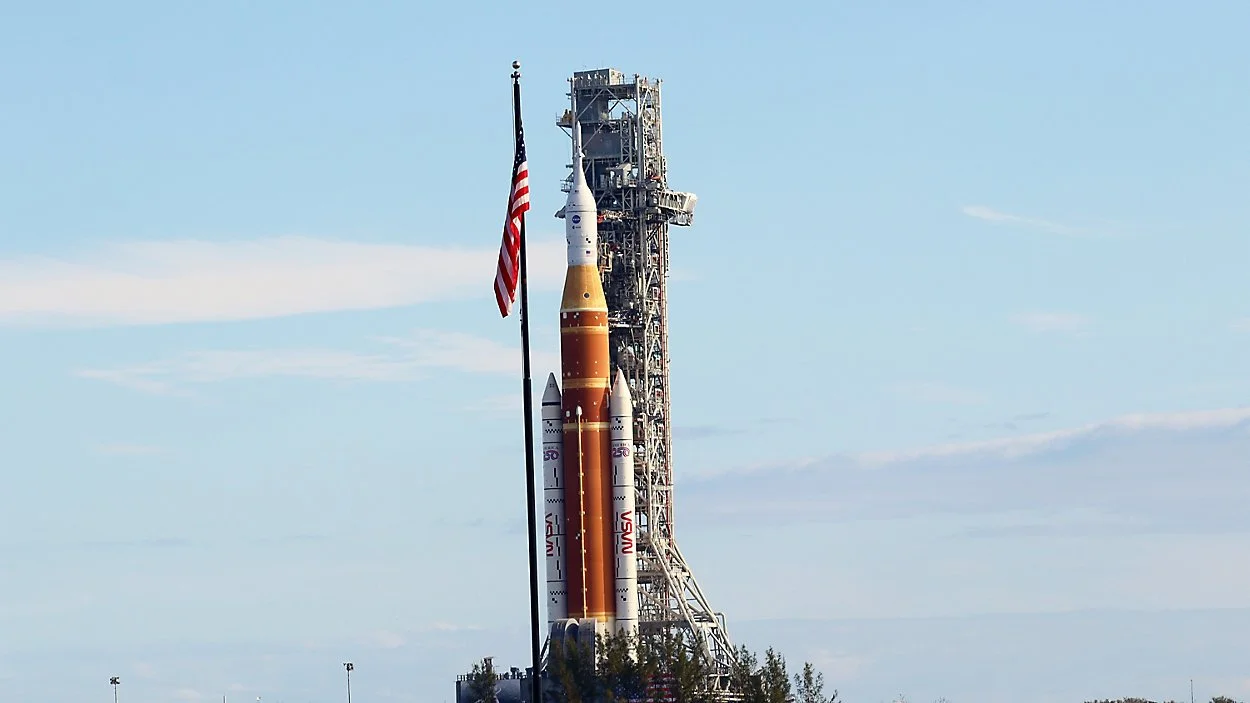
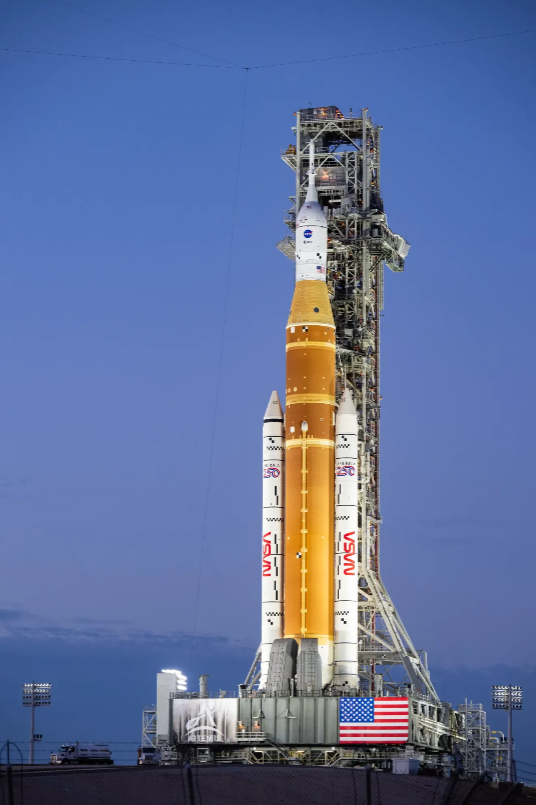
Cape Canaveral, FL., (January 17th, 2025)- At NASA’s Kennedy Space Center in Florida on January 17, 2026, an event of both symbolic and technical significance unfolded: the Artemis II Space Launch System (SLS) rocket and its Orion spacecraft were carefully transported to Launch Complex 39B after a nearly 12-hour crawl from the Vehicle Assembly Building. This measured journey, covering roughly four miles under the steady watch of engineers and technicians, marks a decisive step toward the first crewed lunar mission in more than half a century.
The sight of the towering rocket, its gleaming orange and white segments illuminated against the dusk sky, recalls the imagery of the Apollo era while pointing firmly forward. Launch Pad 39B, itself a historic site first activated for Saturn V launches in the late 1960s and later adapted for Shuttle and SLS missions, stands ready once again to support human exploration beyond low Earth orbit.
This milestone is not merely logistical. It represents a complex choreography of engineering precision, operational planning, and cross-disciplinary expertise. NASA’s decision to proceed with the rollout followed exhaustive preparations — from the integration of propulsion systems and avionics in the Vehicle Assembly Building to extensive ground tests of the Orion spacecraft’s life-support capabilities. This multi-year campaign demonstrates the agency’s sustained commitment to the Artemis program’s broader objectives: returning humans to lunar space and laying the groundwork for sustainable exploration, including future missions to Mars.
Yet the movement of hardware to the pad is more than a technical achievement; it is a cultural one. In an era where space exploration has grown more international and commercially vibrant, Artemis II reconnects the United States with a legacy of human spaceflight that has inspired generations. This mission, crewed by four astronauts — three from NASA and one from the Canadian Space Agency — is the first in decades to carry humans farther from Earth than the International Space Station.
The months ahead will test both machine and mission design. NASA plans a “wet dress rehearsal,” during which teams will load cryogenic propellants into the SLS to validate launch procedures under realistic conditions. Only after this and other evaluations will a final launch date, currently targeted for early February, be formalized. The rigor of these preparations reflects lessons learned across generations of spaceflight: ambition must be matched with discipline, and exploration must be underpinned by safety.
Critically, Artemis II serves as a stepping stone. It will not yet attempt a lunar landing, but will instead send its crew on a roughly ten-day journey around the Moon and back. In doing so, it will test systems that will be essential for Artemis III and subsequent missions designed to establish a sustained human presence on the lunar surface.
In a broader context, this moment invites reflection on what human spaceflight represents in the early 21st century. It is at once an emblem of scientific curiosity, a testament to international cooperation, and a reminder of the long arcs of planning, engineering, and policy that such endeavours require. As the Artemis II rocket now stands poised for the next phase of its journey, the world watches not just a machine on a pad, but a renewed commitment to exploration that continues to push the boundaries of what humanity can achieve.