
Artemis III core stage arrives in Florida ahead of planned 2027 Moon landing mission
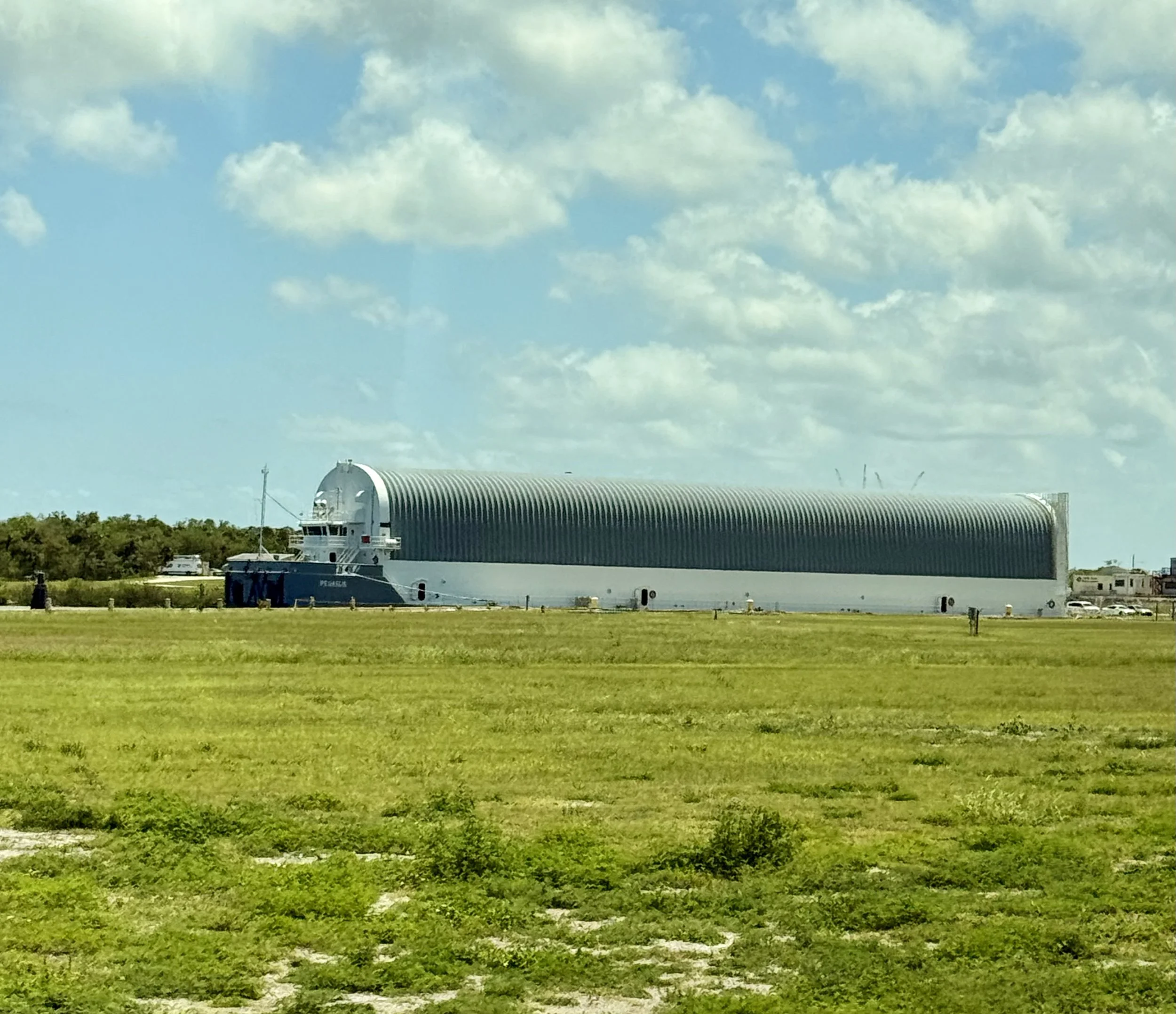
NASA’s Pegasus barge arrives at Kennedy Space Center carrying the core stage for the Artemis III Space Launch System rocket, marking a key milestone ahead of the planned 2027 lunar mission. Photo: Andrew Javor/Florida Spaceflight
Cape Canaveral, Florida — NASA has taken a major step toward its next crewed lunar landing mission with the arrival of the core stage for the Artemis III Space Launch System rocket at Kennedy Space Center. The stage, built by Boeing at NASA’s Michoud Assembly Facility in Louisiana, was transported by barge to Florida, where it will undergo final processing ahead of a planned 2027 launch.
The core stage is the central backbone of NASA’s SLS rocket, standing more than 200 feet tall and housing the vehicle’s propellant tanks and four RS-25 engines. Its arrival marks the transition from manufacturing to launch site operations, where engineers will prepare the stage for integration with the rest of the Artemis III launch vehicle.
Once fully assembled, the SLS rocket will send a crew aboard NASA’s Orion spacecraft on a mission designed to return astronauts to the surface of the Moon for the first time since the Apollo era. Artemis III is expected to land astronauts near the lunar south pole, a region of growing interest due to the presence of water ice and its potential for future exploration.
Following its arrival at Kennedy Space Center, the core stage will be moved into the Vehicle Assembly Building, where it will be stacked with twin solid rocket boosters, an interim cryogenic propulsion stage, and the Orion spacecraft. The integrated rocket will then roll out to Launch Complex 39B for final testing and launch operations.
The delivery of the Artemis III core stage comes as NASA continues to refine timelines for its Artemis program, which aims to establish a sustained human presence on the Moon. Artemis II, currently targeted to fly astronauts on a lunar flyby mission, will precede Artemis III and serve as a critical test of the Orion spacecraft and SLS systems with crew aboard.
Technically, the Artemis III core stage is similar in design to those used on Artemis I and II, incorporating upgrades and refinements based on data gathered from earlier flights. The stage is powered by four RS-25 engines, previously used on the Space Shuttle, which burn liquid hydrogen and liquid oxygen to produce more than 2 million pounds of thrust.
The SLS rocket, combined with its solid rocket boosters, will generate over 8 million pounds of thrust at liftoff, making it the most powerful rocket NASA has ever developed. This capability is essential for sending heavy payloads and crewed spacecraft beyond low Earth orbit and toward the Moon.
Artemis III will also rely on SpaceX’s Starship human landing system to transport astronauts from lunar orbit to the Moon’s surface and back. The mission represents a complex integration of multiple systems, including Orion, SLS, and commercial lunar landers, reflecting NASA’s broader strategy of leveraging partnerships with industry.
With the core stage now in Florida, NASA teams will focus on completing integration milestones over the coming months. While the 2027 launch target remains subject to change as testing progresses, the arrival of the core stage underscores continued forward movement in the Artemis program.
As preparations continue, Artemis III remains a cornerstone of NASA’s long-term exploration plans, setting the stage for future missions aimed at building a sustainable human presence on and around the Moon.