
SpaceX delays Falcon Heavy launch of ViaSat-3 F3 to April 29 due to weather
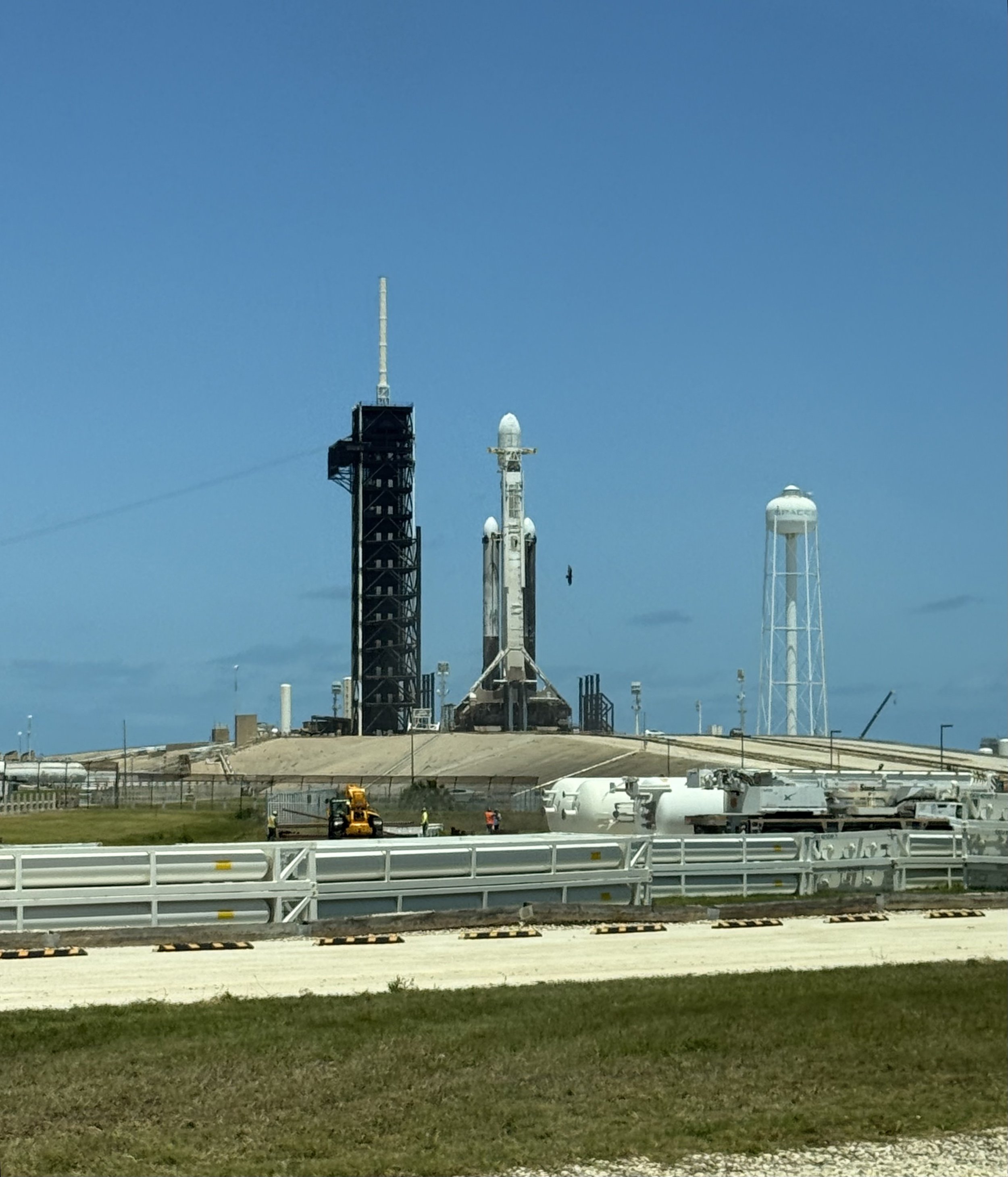
Falcon Heavy stands poised on Launch Complex 39A at Kennedy Space Center ahead of the ViaSat-3 F3 mission, as SpaceX teams prepare for a weather-delayed launch attempt targeting April 29, 2026. Photo: Andrew Javor/Florida Spaceflight
Cape Canaveral, Florida — SpaceX has delayed the launch of its Falcon Heavy rocket carrying the ViaSat-3 F3 communications satellite due to unfavorable weather conditions along Florida’s Space Coast. The company is now targeting liftoff on Wednesday, April 29, 2026, at 10:13 a.m. EDT.
The mission, set to launch from Launch Complex 39A at Kennedy Space Center, will deliver the third and final satellite in ViaSat’s ViaSat-3 constellation to geostationary transfer orbit. The delay comes as meteorologists cited concerns including thick cloud cover and potential violations of launch weather constraints.
SpaceX did not specify which particular weather rules were violated, but typical concerns for Florida launches include cumulus cloud formation, anvil clouds, and electric field risks. Weather has been a recurring factor in recent launch scheduling, particularly during the spring months when atmospheric instability increases along the coast.
The ViaSat-3 F3 satellite is a critical component of ViaSat’s plan to deliver global broadband coverage. The first two satellites in the series were launched in previous years to cover the Americas and the Europe, Middle East, and Africa (EMEA) regions. The F3 satellite will complete the network by extending high-capacity internet service across the Asia-Pacific region.
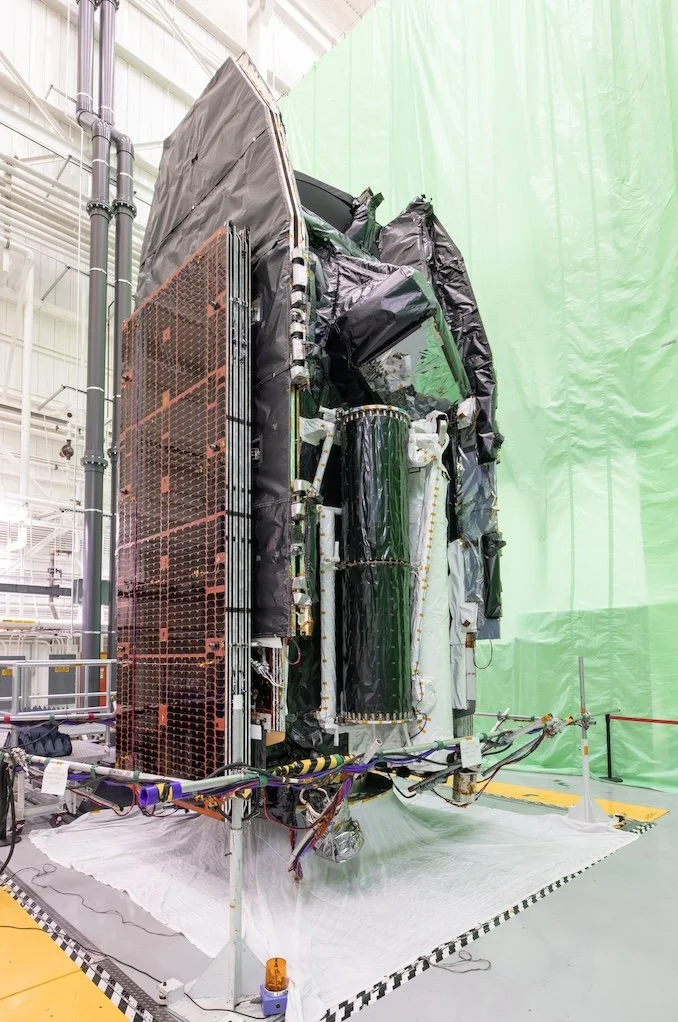
The ViaSat-3 Flight 3 satellite is seen inside Boeing’s test facilities in El Segundo, CA. Image: Boeing
Built to provide multi-terabit capacity, each ViaSat-3 satellite is designed to significantly expand bandwidth availability, particularly in underserved and remote areas. The satellites operate in geostationary orbit, approximately 22,000 miles above Earth, allowing continuous coverage over large geographic regions.
For this mission, SpaceX is utilizing its Falcon Heavy rocket, the most powerful operational launch vehicle currently flying. The triple-core rocket consists of three Falcon 9 first stages strapped together, generating more than 5 million pounds of thrust at liftoff.
It was not immediately clear whether SpaceX plans to attempt recovery of the side boosters or expend the vehicle for maximum performance. Previous Falcon Heavy missions have varied in recovery strategy depending on payload mass and orbital requirements.
The launch marks one of the few Falcon Heavy missions scheduled for 2026 and underscores the vehicle’s continued role in supporting high-mass payloads to geostationary orbit. While SpaceX’s Falcon 9 handles the majority of the company’s launch cadence, Falcon Heavy is reserved for missions requiring additional lift capability.
Once launched, ViaSat-3 F3 will undergo a series of orbit-raising maneuvers before reaching its final geostationary slot. The satellite is expected to enter service following a period of on-orbit testing and deployment of its large communications antennas.
If weather conditions improve, SpaceX will proceed with the Wednesday morning launch attempt. Backup opportunities may be available in the days following, depending on range availability and vehicle readiness.
The successful deployment of ViaSat-3 F3 will complete ViaSat’s next-generation satellite network, positioning the company to compete more directly in the global satellite broadband market alongside emerging low-Earth orbit constellations.