
Blue Origin Targets New Glenn Return to Flight by End of Year After Cape Canaveral Pad Explosion
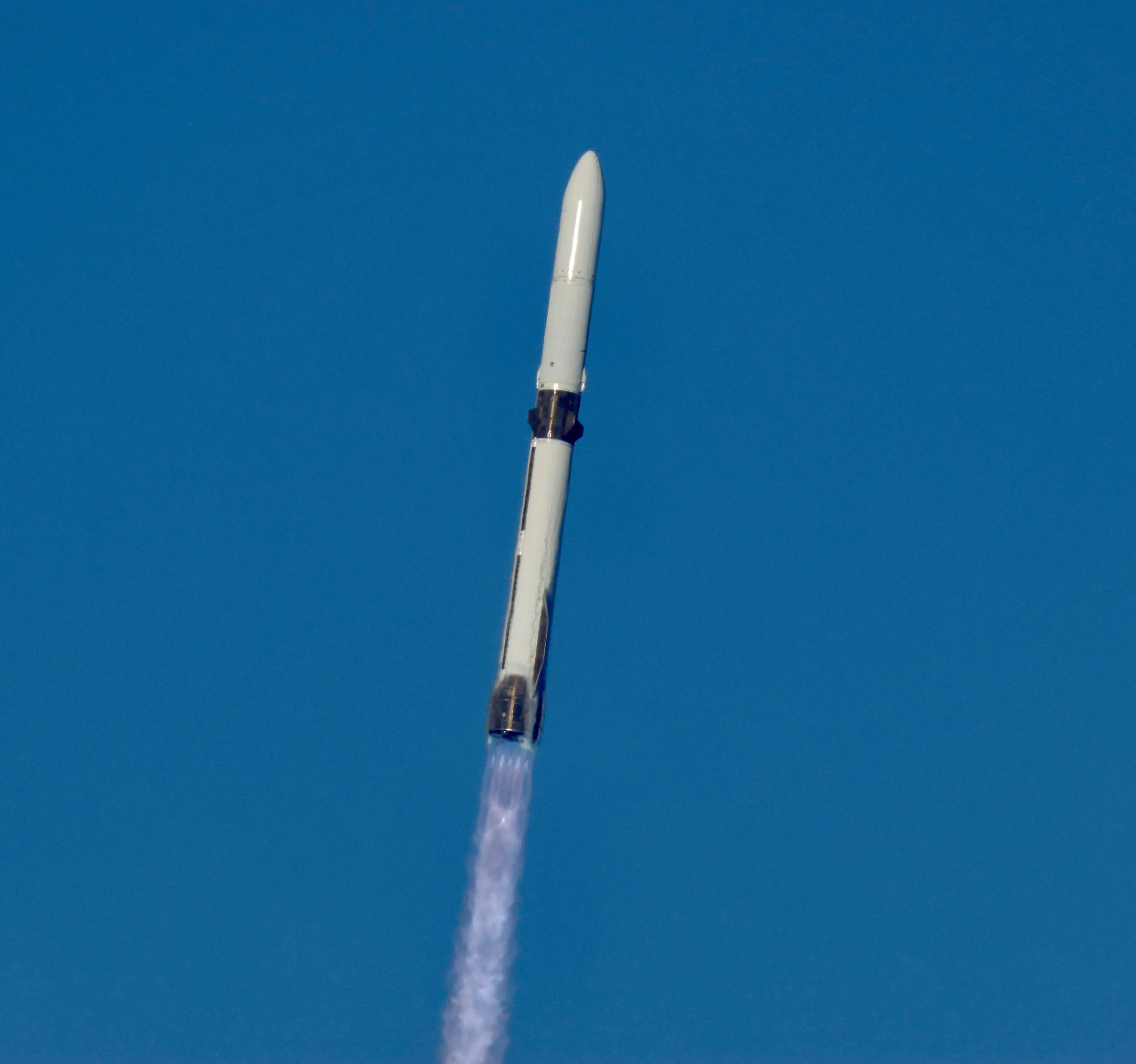
Blue Origin’s New Glenn rocket launches on the NG-2 mission.
CAPE CANAVERAL, Florida — Blue Origin says it plans to resume New Glenn launches before the end of 2026, less than a week after one of its heavy-lift rockets was destroyed during a static fire test at Launch Complex 36 at Cape Canaveral Space Force Station.
The explosion occurred May 28 as Blue Origin was preparing New Glenn for its next mission, which was expected to carry a batch of Amazon Leo broadband satellites. The satellites were not installed on the vehicle at the time of the test, and no injuries were reported.
The mishap destroyed the New Glenn rocket and its transporter-erector, the large ground structure used to move the rocket to the pad and raise it vertically for launch. A lightning tower was also destroyed, and imagery from the site showed damage to parts of the pad’s support structure. But Blue Origin CEO Dave Limp said the damage was not as extensive as initially feared.
“Now that we’ve had access to the pad and integration facility we can share a bit of good news,” Limp said in a post on X. “The propellant farm, oxygen, liquid hydrogen and LNG tanks are all in good shape. This is good luck because these are very long lead items.”
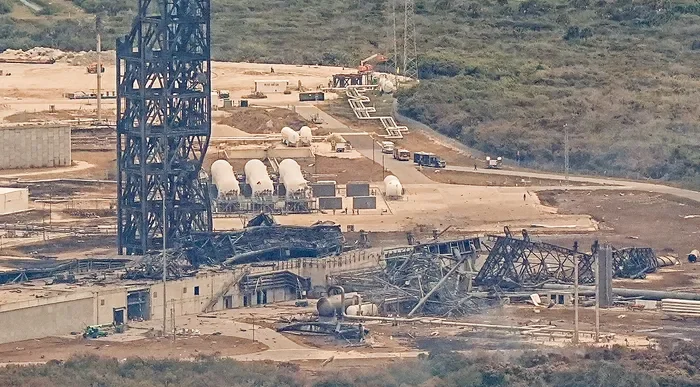
Significant damage seen the morning after the New Glenn rocket explosion.
Limp also said the water tower survived and that the main support tower, while damaged, can be repaired in place rather than demolished and replaced. He added that another New Glenn first stage and three upper stages inside the company’s nearby integration facility appear to be in good condition.
Blue Origin had already been working on plans to move away from its transporter-erector system in favor of a vertical rocket assembly capability. Limp said the company now intends to move directly to that approach, eliminating the need to build a replacement transporter-erector.
The cause of the explosion has not been announced. The test was intended to verify the rocket’s readiness for flight by loading propellant and firing the first stage’s seven BE-4 engines while the vehicle remained secured to the pad. Static fire tests are common across the launch industry, but the New Glenn test ended in a fire at the base of the booster followed by a major explosion.
“We will fly again before the end of this year,” Limp said, ending his statement with Blue Origin’s motto, “Gradatim Ferociter,” meaning “step by step, ferociously.”
The timeline is ambitious. Ars Technica reported that former SpaceX personnel it consulted were skeptical of a return to flight within roughly six months, with 12 months viewed by some as a best-case recovery scenario and 18 months considered more likely.
Launch Complex 36 is currently Blue Origin’s only operational orbital launch pad for New Glenn. That makes the pad recovery central not only to Blue Origin’s commercial launch manifest, but also to NASA’s Artemis planning and Amazon’s satellite deployment schedule.

New Glenn explodes during a “Hot Fire” test at LC-36.
New Glenn is expected to support Amazon’s low Earth orbit broadband network, known as Amazon Leo, while also serving as the launch vehicle for Blue Origin’s Blue Moon lunar lander architecture. NASA has selected Blue Origin’s Blue Moon Mark 2 crewed lander as one of the Human Landing System options for future Artemis missions, alongside SpaceX’s Starship-based lander.
NASA Administrator Jared Isaacman said the agency would support Blue Origin’s investigation and pad recovery effort.
“Blue Origin leadership has responded incredibly quickly, and NASA will do all we can to help with root cause analysis and accelerate pad recovery timeframes while staying extremely focused on progressing the lander,” Isaacman said on X.
Kennedy Space Center Director Brian Hughes also told the Space Florida board that NASA is continuing to focus on lunar lander development, saying the agency is working with both Blue Origin and SpaceX lunar lander technology to keep the Artemis program moving toward a planned astronaut return to the Moon before the end of 2028.
For Blue Origin, the next steps will include completing the mishap investigation, confirming the condition of critical ground systems, and determining how quickly LC-36 can be returned to operational status. Until then, New Glenn remains grounded, and the company’s year-end return-to-flight target will depend on both the technical findings and the pace of pad repairs at Cape Canaveral.