
Blue Origin’s New Glenn Rocket Destroyed in Static Fire Explosion at Cape Canaveral
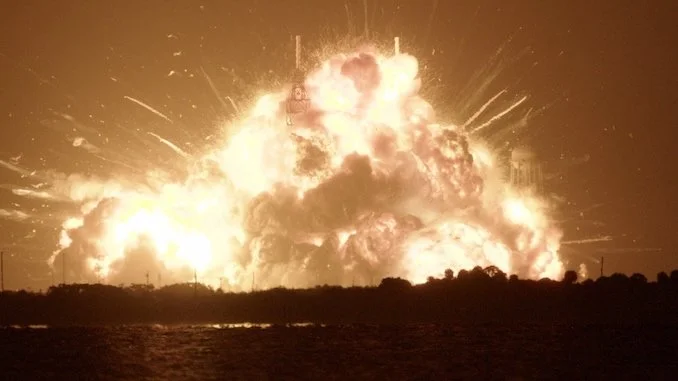
Blue Origin’s New Glenn rocket exploded on the pad at Launch Complex 36 at Cape Canaveral Space Force Station as the result of an anomaly during a static fire test on Thursday, May 28. The test was in preparation for a planned launch as soon as June 4.
Cape Canaveral, Florida — Blue Origin’s New Glenn rocket was destroyed Thursday night after an explosion erupted during prelaunch static fire testing at Launch Complex 36 at Cape Canaveral Space Force Station, marking a major setback for the company’s heavy-lift launch program.
The anomaly occurred around 9 p.m. EDT as the vehicle appeared to be entering an engine-firing sequence for the ground test. Video from the area showed a large fireball engulfing the base of the rocket before debris fell around the launch pad.
Blue Origin confirmed after the incident that all personnel were accounted for and safe. Company founder Jeff Bezos said it was too early to determine the root cause, but said teams were already working to identify what happened and would “rebuild whatever needs rebuilding.”
The rocket was completely destroyed in the explosion. The failure also destroyed the strongback, formally known as the transporter erector, and at least one of the pad’s lightning protection towers. Spaceflight Now reported that the anomaly appeared to destroy the transporter erector and at least one lightning tower at LC-36, though a full assessment will be needed to determine the total extent of damage to the pad.
The test was being conducted ahead of a planned New Glenn launch as soon as June 4 carrying satellites for Amazon Leo, Amazon’s planned broadband satellite network. The satellites had not yet been transported from their payload processing facility to the launch site for integration with the rocket. The mission was expected to be the first of 24 Amazon Leo launches booked on New Glenn.
Static fire tests are standard prelaunch milestones used to verify the rocket, ground systems, fueling operations, engine startup sequence and countdown procedures while the vehicle remains secured to the pad. In this case, the test ended in the loss of the rocket and serious damage to Blue Origin’s only operational orbital launch facility.
Space Launch Delta 45, which manages the Eastern Range, said the range remained fully mission capable and continued supporting operations at other launch complexes. The statement came as other Space Coast launch activity remained scheduled following the LC-36 incident.
The Federal Aviation Administration said the static fire test was not within the scope of FAA-licensed launch activities and that there was no impact to air traffic. The FAA had recently accepted findings from a Blue Origin-led investigation into a previous New Glenn in-flight anomaly involving the vehicle’s upper stage.
New Glenn is Blue Origin’s partially reusable heavy-lift rocket, powered at liftoff by seven methane-fueled BE-4 engines. The vehicle is designed to compete for commercial, civil and national security launch contracts, including large satellite deployments and missions tied to NASA’s Artemis architecture.
The loss of the rocket and damage to LC-36 could have longer-term consequences for Blue Origin’s launch cadence. Unlike SpaceX, which operates multiple orbital pads in Florida and California, Blue Origin currently relies on Launch Complex 36 as New Glenn’s only orbital launch site. Spaceflight Now noted that the root-cause investigation may be completed before the pad itself is ready to return to service.
NASA is also watching the investigation closely. Blue Origin’s New Glenn and Blue Moon lunar lander architecture are expected to support future Artemis-related missions, including cargo and human landing system work. NASA said it was aware of the anomaly and would work with partners to assess any near-term mission impacts.
Blue Origin has not announced a revised launch target for the Amazon Leo mission. The company’s next steps will include securing the pad, assessing damage to LC-36, preserving data from the test and completing a root-cause investigation before New Glenn can return to flight operations from Cape Canaveral.