
Crew-12 lifts off from Florida, returns Space Station to full strength as Dragon “Freedom” heads for Valentine’s Day docking
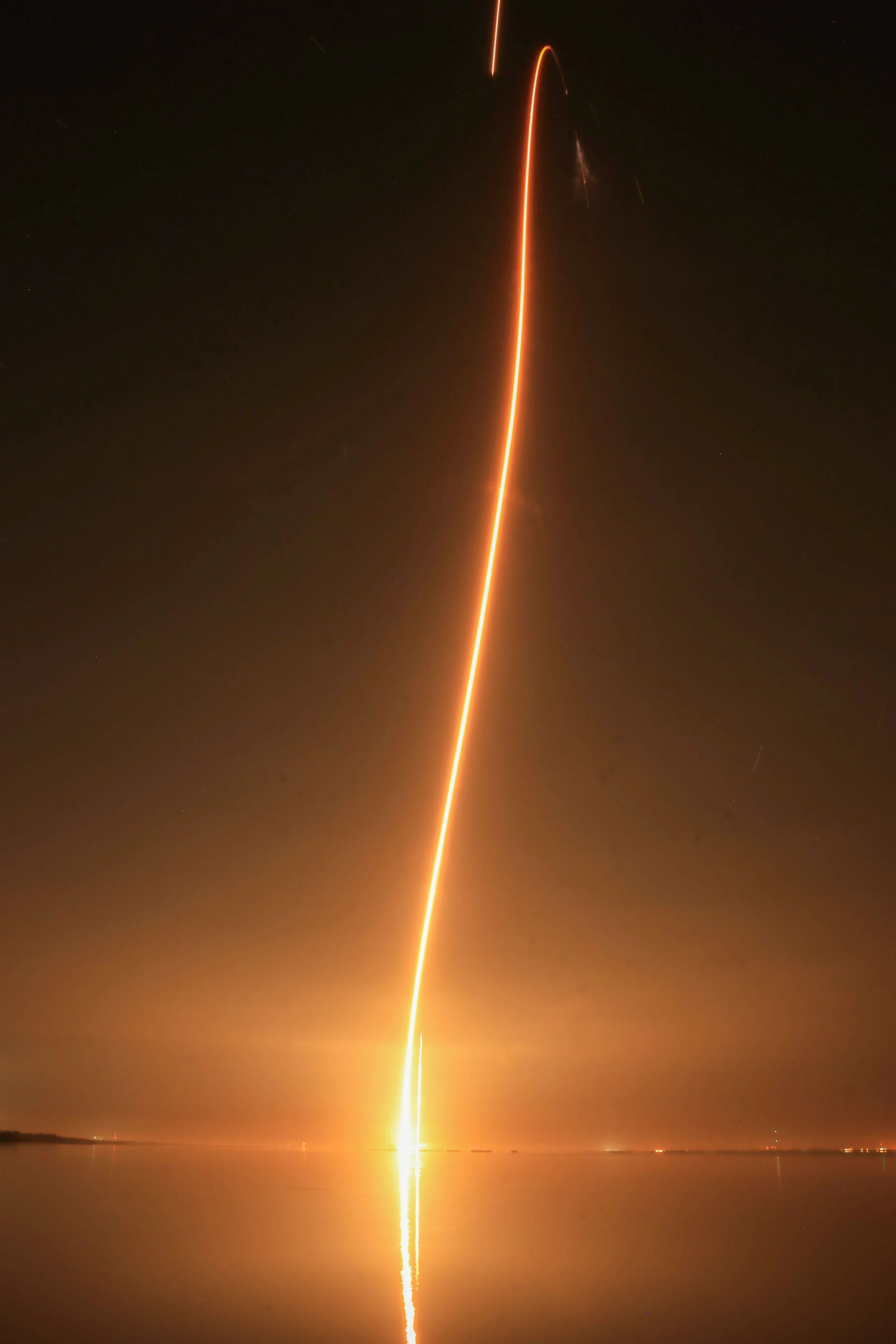
Photo Credit: Florida Spaceflight/Andrew Javor
Cape Canaveral, FL. (February 13th, 2026) — SpaceX and NASA kicked off Friday morning with a flawless Crew-12 launch to the International Space Station, sending a four-person international crew into orbit at 5:15 a.m. EST (10:15 UTC) on Feb. 13, 2026 from Space Launch Complex 40 at Cape Canaveral Space Force Station.
Riding atop a Falcon 9, the Crew Dragon Freedom carried NASA astronauts Jessica Meir and Jack Hathaway, ESA astronaut Sophie Adenot, and Roscosmos cosmonaut Andrey Fedyaev. Meir and Fedyaev are flying their second missions, while Hathaway and Adenot are making their first trips to space.
“A wonderful start to the day” — and a historic Florida first
In post-launch remarks, NASA Administrator Jared Isaacman called Crew-12 “a remarkable” mission start, highlighting both the clean ascent and the crowd-pleasing return-to-launch-site landing.
That landing was more than a highlight reel moment: NASA noted the Falcon 9 first stage landed inside the SLC-40 perimeter, marking the first time SpaceX has launched and landed a booster from the same Florida launch complex.
Commercial Crew Program Manager Steve Stich said the countdown ran “really quiet,” with “nothing really off nominal,” and confirmed Dragon’s on-orbit checkouts looked strong, including Draco thruster performance and overall vehicle health as the spacecraft began its rendezvous sequence. (All mission quotes in this article are drawn from the transcript you provided.)
Docking target: Saturday afternoon
NASA and SpaceX are targeting docking at about 3:15 p.m. EST on Saturday, Feb. 14, at the station’s Harmony (Node 2) zenith port, following a ~34-hour chase.
ISS Program Manager Dana Weigel said the arriving crew will spend the first days focused on handover and station basics: emergency procedures, equipment locations, and configuring Dragon with standard emergency hardware—then quickly pivot into time-sensitive transfers and research tasks.
Why this flight matters right now
Crew-12’s arrival restores the ISS to its normal seven-person staffing after a recent period of reduced headcount tied to Crew-11’s early return.
Beyond near-term station operations, Isaacman framed the mission as part of NASA’s bigger arc: maximizing ISS research value, enabling a future “orbital economy,” and building operational momentum as Artemis planning continues. NASA has stated the next Artemis II launch window is expected to open in early March.
One forward-looking note from Isaacman stood out: he said NASA expects a first “spaceship-to-space-station call” between the ISS and a lunar mission during Artemis II, underscoring how low Earth orbit operations are increasingly being treated as a proving ground for deep-space exploration.
SpaceX milestones: Dragon Freedom keeps building its resume
SpaceX’s Juliana Sharman (Dragon programs) shared several program milestones discussed in the briefing, including that Crew-12 is SpaceX’s 20th human spaceflight mission and that Freedom is flying its fifth mission.
Reuters also reported the crew’s long-duration stay is expected to last about eight months, continuing science and technology work in microgravity with research areas that can include biology and plant-microbe studies relevant to long-duration exploration.