
NASA Continues Artemis II Data Review Following Confidence Test at Kennedy Space Center
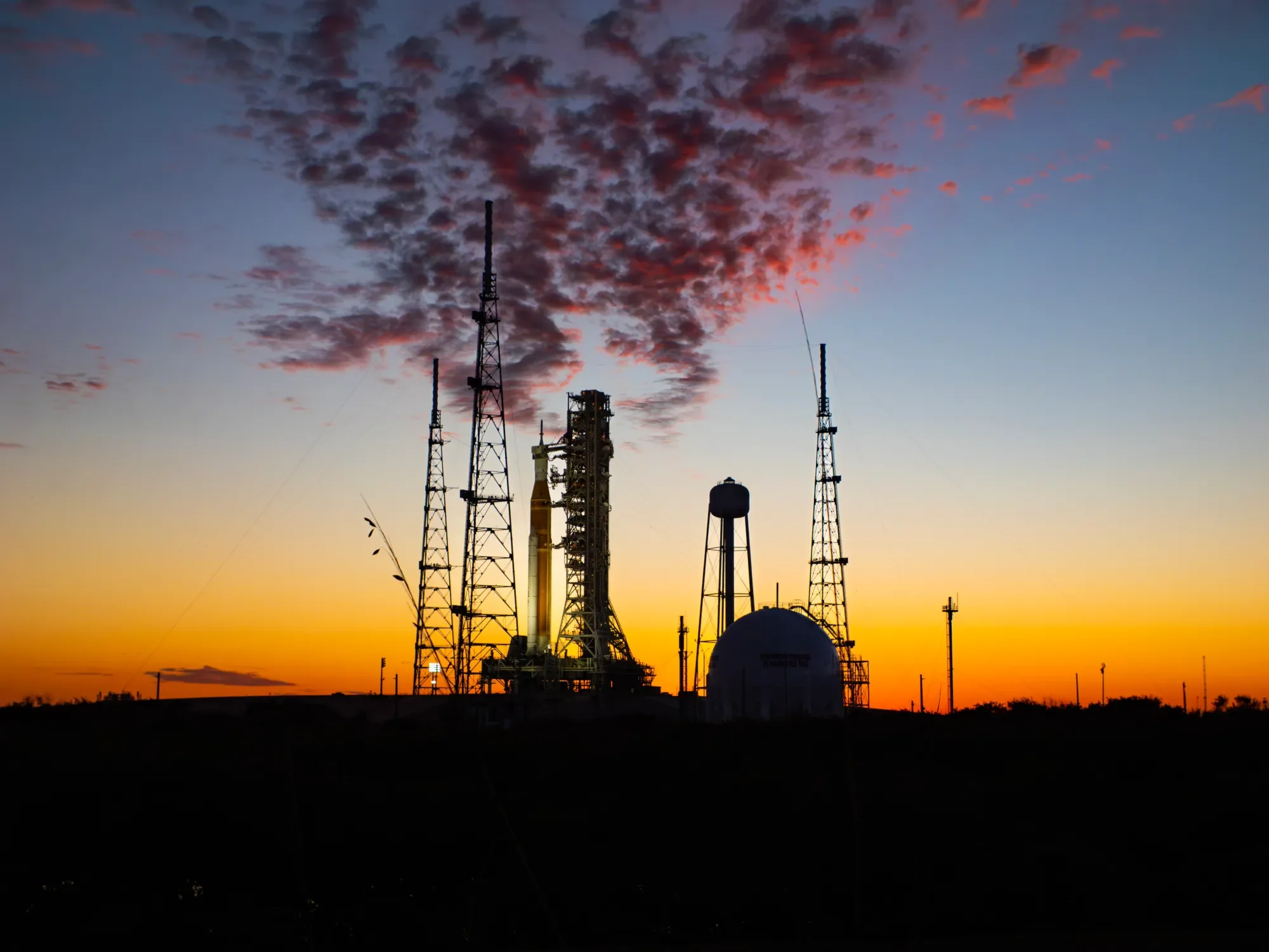
Photo Credit: NASA/Sam Lott
Kennedy Space Center, FL., (February 13th, 2026) - NASA teams are continuing to analyze data after completing a key confidence test of the Space Launch System (SLS) rocket at Kennedy Space Center as preparations move forward toward the Artemis II mission.
The test, conducted on Feb. 12 at Launch Complex 39B, focused on evaluating newly replaced seals within the SLS core stage liquid hydrogen system. During the operation, engineers partially filled the rocket’s liquid hydrogen tank to verify the performance of the updated components in an area critical to fueling operations ahead of launch.
While the test met several primary objectives, teams encountered an issue involving ground support equipment that temporarily reduced the flow rate of liquid hydrogen into the vehicle. Despite the anomaly, engineers were able to gather valuable data at the core stage interfaces, particularly in the same portion of the fueling process where a hydrogen leak was observed during a previous wet dress rehearsal.
NASA officials say the information collected will play a key role in confirming the integrity of the sealing system and overall fueling procedures. Over the coming days, engineers will purge the affected lines to maintain proper environmental conditions and conduct inspections of the ground systems. A filter within the ground support equipment is suspected to have contributed to the reduced propellant flow and will be replaced before future testing.
The agency will continue reviewing the results before determining a timeline for the next major milestone, a second wet dress rehearsal expected later this month. This full fueling test will simulate launch-day operations and remains a critical step in certifying the vehicle for flight.
March continues to represent the earliest possible launch window for Artemis II, which will send astronauts around the Moon and mark the first crewed mission of NASA’s Artemis program. The mission is seen as a major step toward returning humans to the lunar surface later this decade.
Florida Spaceflight will continue to provide updates as NASA advances testing and moves closer to launch from the Space Coast.