
NASA Targets April 1 Launch for Artemis II Following Flight Readiness Review
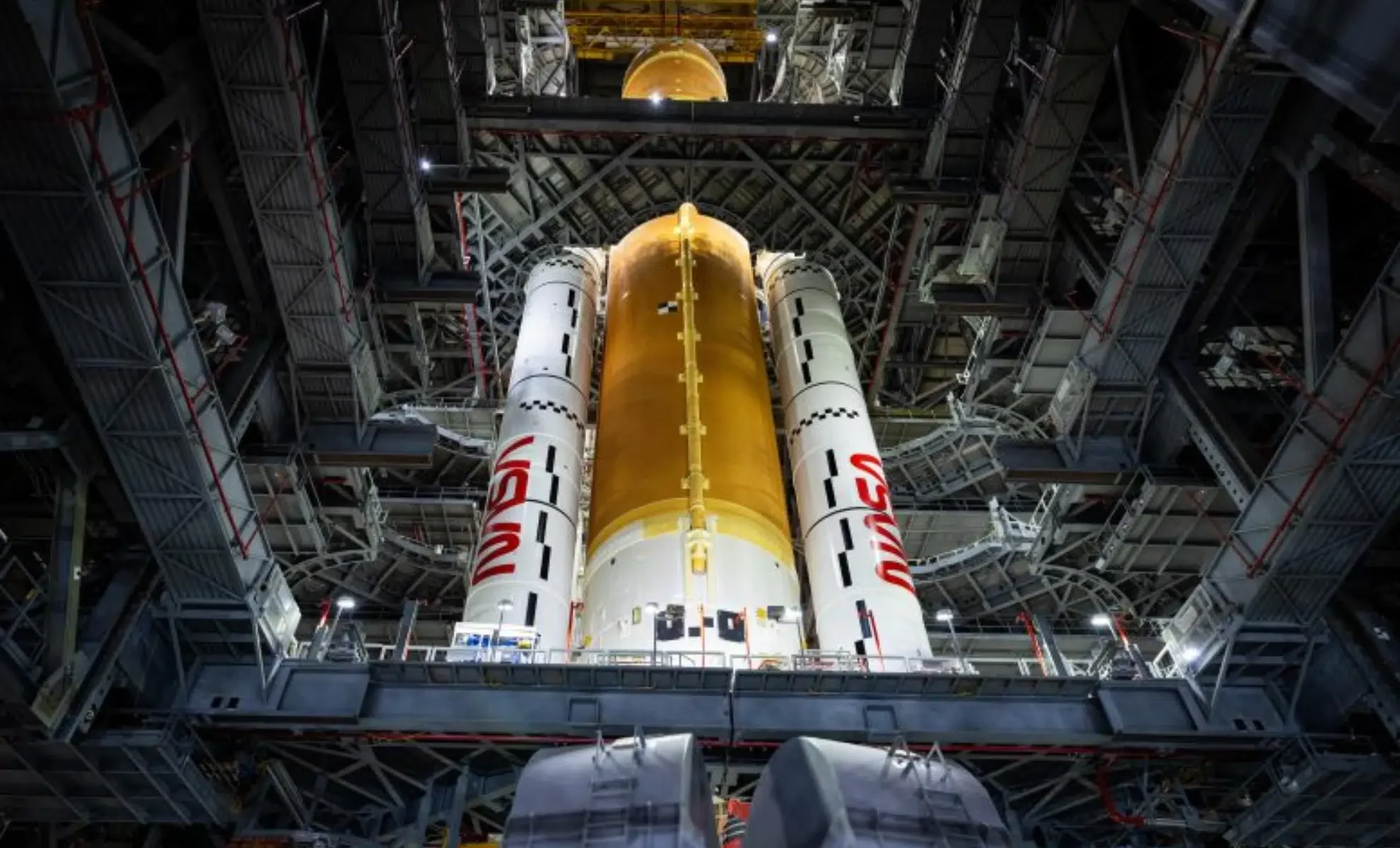
Cape Canaveral, FL., (March 12th, 2026) — NASA officials say the agency is moving forward toward the launch of Artemis II after completing a multi-day Flight Readiness Review, a major milestone confirming the Space Launch System rocket, Orion spacecraft, and supporting ground systems are nearing readiness for flight.
During a press briefing following the review, NASA managers confirmed teams are targeting an April 1 launch opportunity for the first crewed mission of the Artemis program, which will send four astronauts on a test flight around the Moon before returning to Earth. Pasted text
The Flight Readiness Review, held over two days, brought together program leaders, engineers, and mission managers to assess the readiness of the integrated Artemis II system. The review examined technical risks, outstanding work, and operational readiness across the rocket, spacecraft, and launch infrastructure.
At the conclusion of the review, NASA leadership polled teams across the program and received a “go” to proceed toward launch, pending completion of final work in the Vehicle Assembly Building and at the launch pad. Pasted text
“This is our final big assessment of readiness for launch,” said Lori Glaze, acting associate administrator for NASA’s Exploration Systems Mission Directorate. She noted that the review included detailed discussions about risk posture and mitigation strategies for the mission. Pasted text
The Artemis II mission will mark the first time astronauts travel beyond low Earth orbit since the Apollo program. The roughly 10-day flight will send NASA astronauts Reid Wiseman, Victor Glover, and Christina Koch, along with Canadian Space Agency astronaut Jeremy Hansen, on a trajectory around the Moon before returning to Earth.
The review comes after engineers resolved a technical issue that forced the Artemis II rocket to roll back to the Vehicle Assembly Building earlier this year following a wet dress rehearsal. The issue involved a helium quick disconnect used during propellant loading on the rocket’s upper stage.
According to NASA’s Exploration Ground Systems program manager Sean Quinn, engineers traced the problem to a seal that shifted out of position and blocked helium flow through the quick disconnect. Engineers redesigned the component and reinforced another seal to prevent the issue from recurring.
The modified hardware has since undergone testing and has already been installed on the upper stage of the Artemis II rocket. Pasted text
“We were able to replicate the problem, implement a design fix, and successfully test the new configuration,” Quinn said during the briefing. Pasted text
Additional work completed during the rollback includes replacing flight termination system batteries on the core stage and boosters, charging Orion’s launch abort system batteries, and replacing seals on the tail service mast umbilicals used for fueling operations. Pasted text
NASA is currently targeting March 19 to roll the 322-foot-tall Space Launch System rocket back to Launch Complex 39B at Kennedy Space Center. Once at the pad, teams will complete final launch preparations and configure the vehicle for liftoff.
The agency has identified April 1 at 6:24 p.m. Eastern as the first launch opportunity, with additional opportunities available in early April should the initial attempt be delayed. Pasted text
Artemis II will serve as a critical test flight for the Orion spacecraft’s life support systems, navigation, and communications capabilities while operating in deep space. Mission controllers and astronauts have already completed more than 100 days of simulations to prepare for the flight.
NASA officials emphasized that Artemis II remains a test mission and carries inherent risk, but managers say extensive testing and analysis have positioned the program for a successful flight.
If the mission launches as planned, it will represent the first crewed lunar mission since Apollo 17 in 1972 and a major step toward returning astronauts to the Moon under NASA’s Artemis program.
The mission will pave the way for Artemis III, which is planned to land astronauts near the lunar south pole later this decade.