
Artemis II SLS Rocket Rolls Out to Pad 39B After Weather Delay
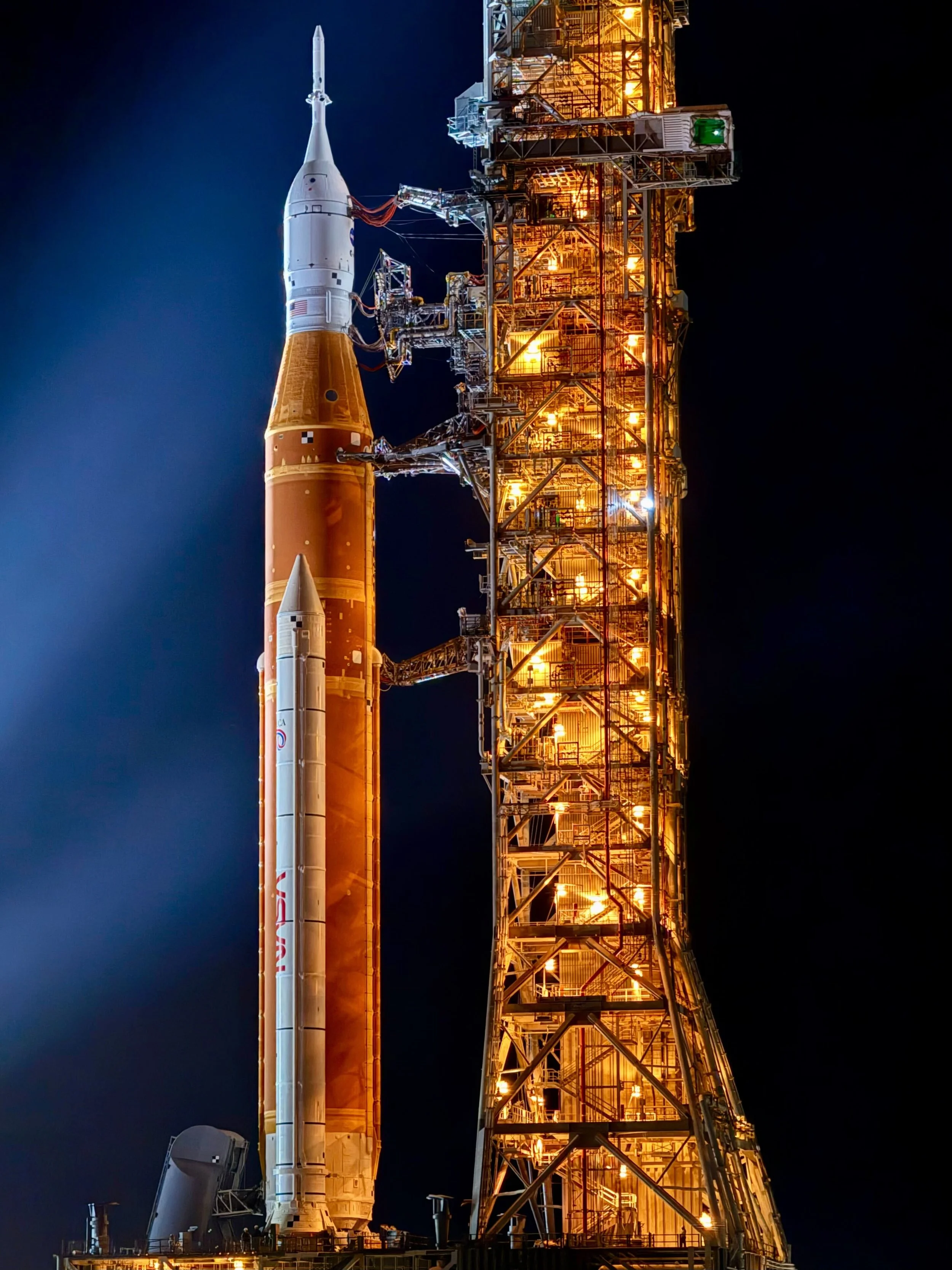
NASA’s Artemis II SLS rocket photographed 2 hours into its 12 hour journey to the launch pad on March 20th, 2026.
Photo Credit: Andrew Javor/Florida Spaceflight
Kennedy Space Center, Florida., (March 20, 2026) —
NASA’s Artemis II Space Launch System rocket began its rollout to Launch Complex 39B early March 20, several hours later than planned, after strong winds forced a delay at Kennedy Space Center.
The rollout, originally scheduled for 8 p.m. EDT on March 19, was postponed due to a high wind warning in the area. The 322-foot-tall rocket ultimately began moving from the Vehicle Assembly Building at 12:21 a.m., marking its second trip to the pad ahead of the agency’s first crewed Artemis mission.
Mounted atop the crawler-transporter, the SLS rocket and Orion spacecraft slowly made the several-mile journey along the crawlerway to Pad 39B. The rollout is a critical step in preparing the vehicle for launch operations, including final pad checkouts and propellant loading procedures.
The delay highlights the sensitivity of rollout operations to weather conditions. High winds can pose a risk to the vehicle while it is exposed outside the protection of the Vehicle Assembly Building, particularly given the height and mass of the integrated SLS stack. NASA managers routinely monitor weather constraints to ensure the safety of both hardware and personnel during the operation.
This marks the second rollout for Artemis II after the vehicle was previously returned to the VAB following a wet dress rehearsal. Engineers used the rollback period to address technical issues identified during testing, including work on ground systems and propellant interfaces.
NASA teams have spent the past several weeks completing final processing inside the VAB. That work included inspections, system checkouts, and hardware updates aimed at preparing the rocket for launch. With those tasks largely complete, the rollout signals a transition from vehicle processing to launch campaign operations at the pad.
Once at Launch Complex 39B, engineers will begin final pad preparations, including configuring the rocket for fueling and completing integrated system checks. The next major milestone will be the countdown sequence leading into launch attempts during the upcoming window.
Artemis II will be the first crewed flight of NASA’s Space Launch System and Orion spacecraft, carrying four astronauts on a mission around the Moon and back to Earth. The flight will test life support systems, navigation, and deep space operations ahead of future lunar landing missions.
The mission builds on the uncrewed Artemis I flight in 2022, which validated the performance of the SLS rocket and Orion spacecraft in deep space. Artemis II will extend those capabilities to human spaceflight, providing critical data for future missions under NASA’s Artemis program.
With the rocket now en route to the pad, attention shifts to final launch preparations and the opening of the launch window. NASA is targeting an early April timeframe (April 1st, 2026) for liftoff, pending completion of remaining work and favorable weather conditions.
If successful, Artemis II will mark the first time astronauts travel beyond low Earth orbit since the Apollo era, setting the stage for subsequent missions aimed at returning humans to the lunar surface.