
Artemis II Lifts Off, Sending Humans Toward the Moon for the First Time Since Apollo 17
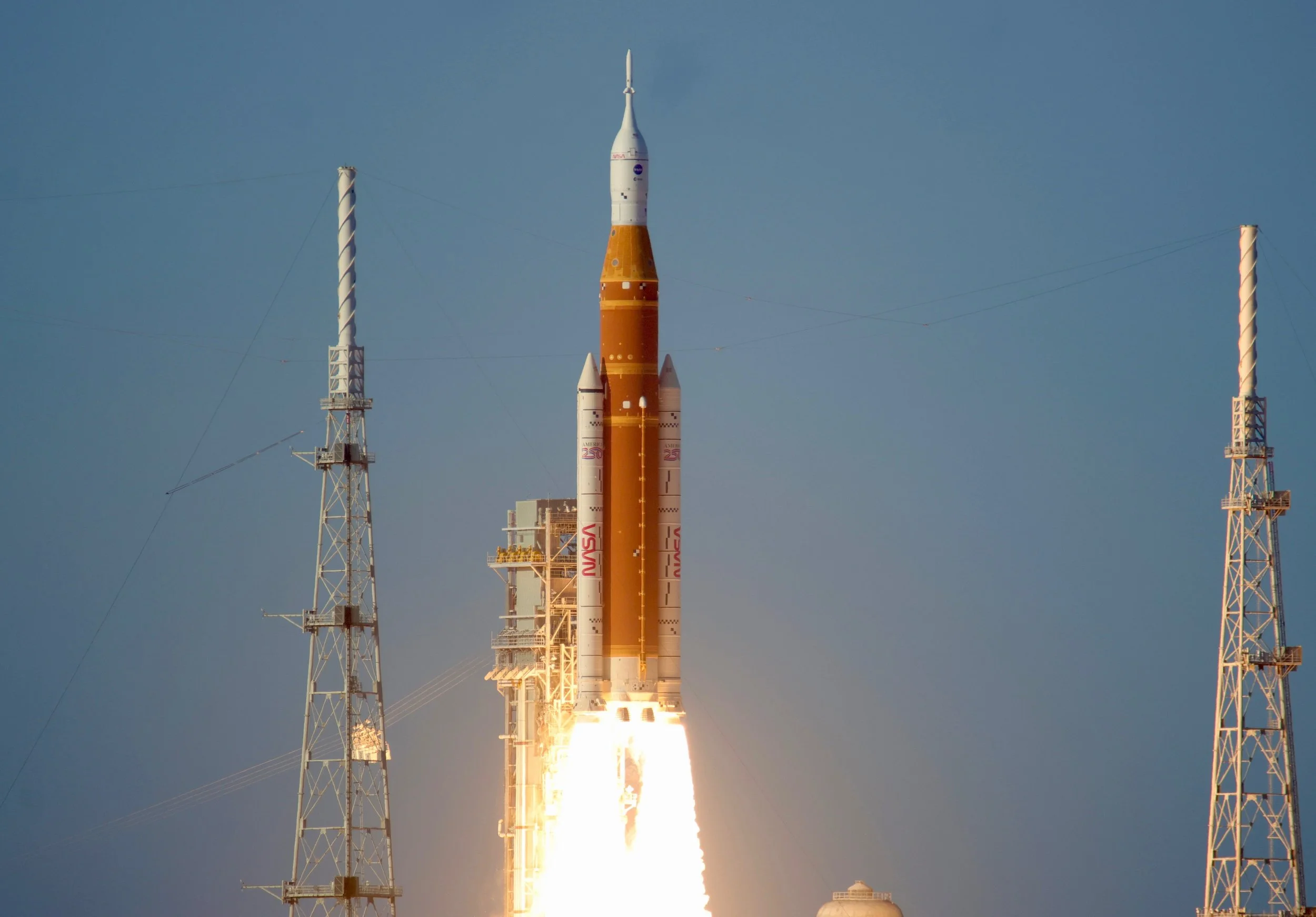
Artemis II Lifts off from Launch Complex 39-B. Photo Credit: Andrew Javor/Florida Spaceflight
Kennedy Space Center, FL., (April 1st, 2026)— NASA successfully launched four astronauts aboard its Artemis II mission, marking the first crewed journey toward the Moon since the Apollo era more than five decades ago. Liftoff occurred from Launch Complex 39B at Kennedy Space Center, powered by the agency’s Space Launch System (SLS), the most powerful rocket currently in operation.
Riding atop the SLS rocket, the crew lifted off inside the Orion spacecraft, beginning a multi-day mission that will send them on a lunar flyby trajectory before returning safely to Earth. The launch represents a major milestone in NASA’s Artemis program, which aims to return humans to deep space and establish a sustained presence on the Moon.
The ascent proceeded as planned, with the SLS core stage and twin solid rocket boosters generating more than 8 million pounds of thrust at liftoff. Following booster separation and core stage cutoff, the Interim Cryogenic Propulsion Stage performed the translunar injection burn, placing Orion on course for its journey around the Moon. NASA reported nominal performance across all major ascent events.
Artemis II is the first crewed test flight of both SLS and Orion. Building on the uncrewed Artemis I mission in 2022, this flight places astronauts aboard Orion to validate life support systems, navigation, communications, and spacecraft handling in deep space. The mission follows a free-return trajectory, looping around the far side of the Moon without entering orbit before heading back to Earth.
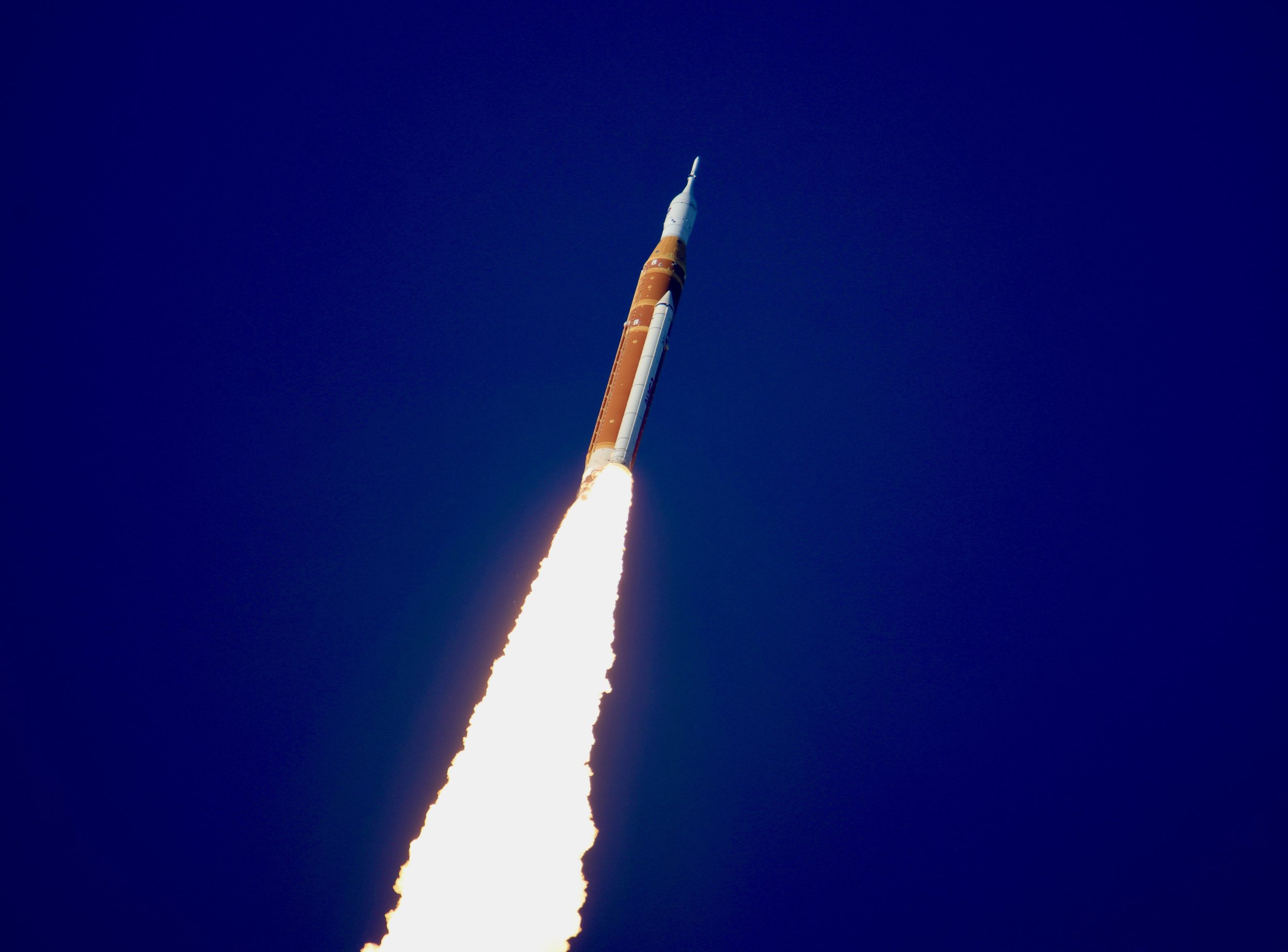
Artemis II in flight after lifting off from Launch Complex 39-B. Photo Credit: Andrew Javor/Florida Spaceflight
The flight will provide critical data on Orion’s Environmental Control and Life Support System, as well as its performance during high-speed reentry, where the spacecraft will encounter velocities approaching 25,000 miles per hour. Engineers will also evaluate crew operations, including manual control capabilities and deep-space communication systems.
Beyond its technical objectives, Artemis II signals the return of human exploration beyond low Earth orbit. It represents a key step in NASA’s broader Artemis campaign, which has undergone adjustments in recent years as the agency refines its long-term lunar strategy.
Under the current plan, the first crewed lunar landing of the Artemis program is now targeted for Artemis IV, as NASA continues development of landing systems and surface infrastructure. The agency has also shifted focus away from earlier concepts such as a dedicated lunar Gateway station, placing greater emphasis on building a sustainable, long-duration human presence on the Moon through surface-based systems and infrastructure.
Following its journey around the Moon, Orion is expected to reenter Earth’s atmosphere and splash down in the Pacific Ocean, where recovery teams will retrieve the crew. The mission is expected to last roughly 10 days.
With Artemis II now underway, NASA will use the data gathered during the mission to finalize systems needed for future lunar missions. The agency’s next steps focus on advancing crewed landing capabilities and establishing the foundation for a permanent human presence on the lunar surface later this decade.