
SpaceX launches CRS-34 cargo mission to International Space Station from Cape Canaveral
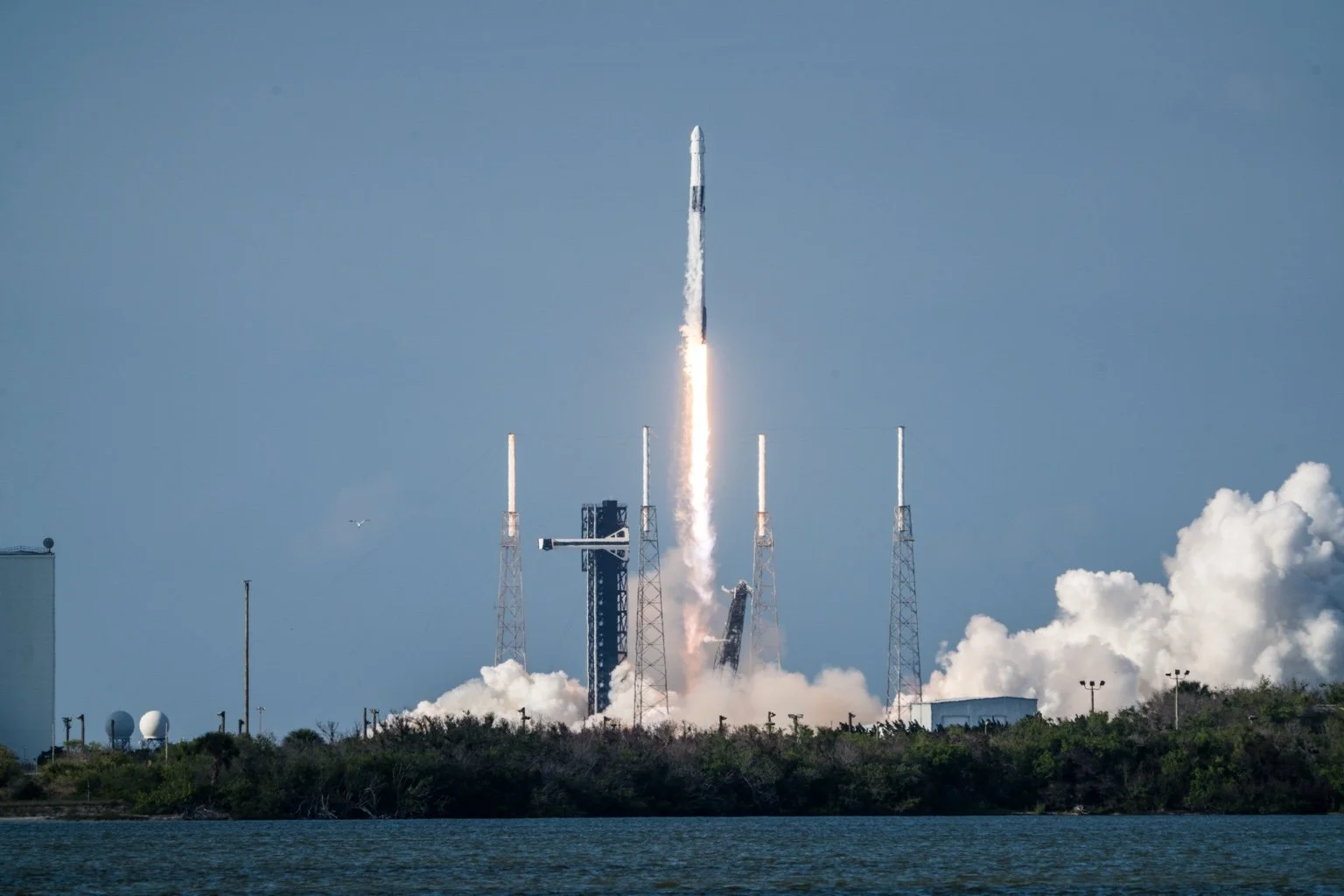
SpaceX launches a Falcon 9 Rocket on the CRS 34 mission to the International Space Station. Photo: Eric Pearce/Florida Spaceflight
Cape Canaveral, Florida — SpaceX successfully launched its 34th Commercial Resupply Services mission for NASA on Friday evening, sending a Cargo Dragon spacecraft packed with scientific research, crew supplies, and hardware to the International Space Station.
The mission, designated CRS-34, lifted off aboard a Falcon 9 rocket from Space Launch Complex 40 at Cape Canaveral Space Force Station at 6:05 p.m. EDT. Clear skies along Florida’s Space Coast provided favorable conditions for the launch, which drew spectators across Brevard County as the rocket climbed northeast over the Atlantic.
A little more than eight minutes after liftoff, the Falcon 9 first stage completed a landing at Landing Zone 1 at Cape Canaveral Space Force Station, continuing SpaceX’s routine reuse and recovery operations. Meanwhile, the Dragon spacecraft separated from the rocket’s upper stage and began its automated rendezvous sequence with the orbiting laboratory.
NASA said the mission is carrying several thousand pounds of cargo to the station, including crew provisions, space station hardware, and scientific experiments that will support research in microgravity. Among the payloads aboard CRS-34 are investigations focused on biology, material science, and technology development intended to support future long-duration spaceflight missions.
The Cargo Dragon spacecraft remains the only operational cargo vehicle currently capable of returning large amounts of research and hardware back to Earth. That capability continues to make the spacecraft a critical part of NASA’s low Earth orbit logistics infrastructure.
CRS-34 is part of NASA’s Commercial Resupply Services contract with SpaceX, which began more than a decade ago as part of the agency’s effort to transition routine cargo transportation to commercial providers. Since the retirement of the Space Shuttle program in 2011, NASA has increasingly relied on partnerships with private industry to maintain consistent access to the International Space Station.
The Falcon 9 rocket used for the mission flew with a previously flown first-stage booster, reflecting SpaceX’s ongoing emphasis on reusability. Recovered boosters are refurbished and reflown multiple times, helping the company maintain a rapid launch cadence while reducing operational costs.
Dragon is expected to arrive at the International Space Station approximately 28 hours after launch, where it will autonomously dock to the Harmony module. Once attached, Expedition crew members aboard the station will unload the spacecraft’s cargo over the following days.
The CRS-34 mission arrives during a busy period of operations aboard the station, as NASA and its international partners continue conducting research aimed at advancing both Earth-based science and future exploration missions to the Moon and Mars.
SpaceX continues to maintain a high launch tempo from Florida’s Space Coast, regularly supporting commercial satellite deployments, NASA missions, and crewed flights to orbit. Additional Falcon 9 missions are scheduled in the coming weeks from both Kennedy Space Center and Cape Canaveral Space Force Station.
Dragon is expected to remain docked to the station for roughly one month before departing and returning experiment samples and equipment back to Earth for recovery off the coast of California.