
SpaceX launches ViaSat-3 F3 satellite on Falcon Heavy, completing global broadband constellation
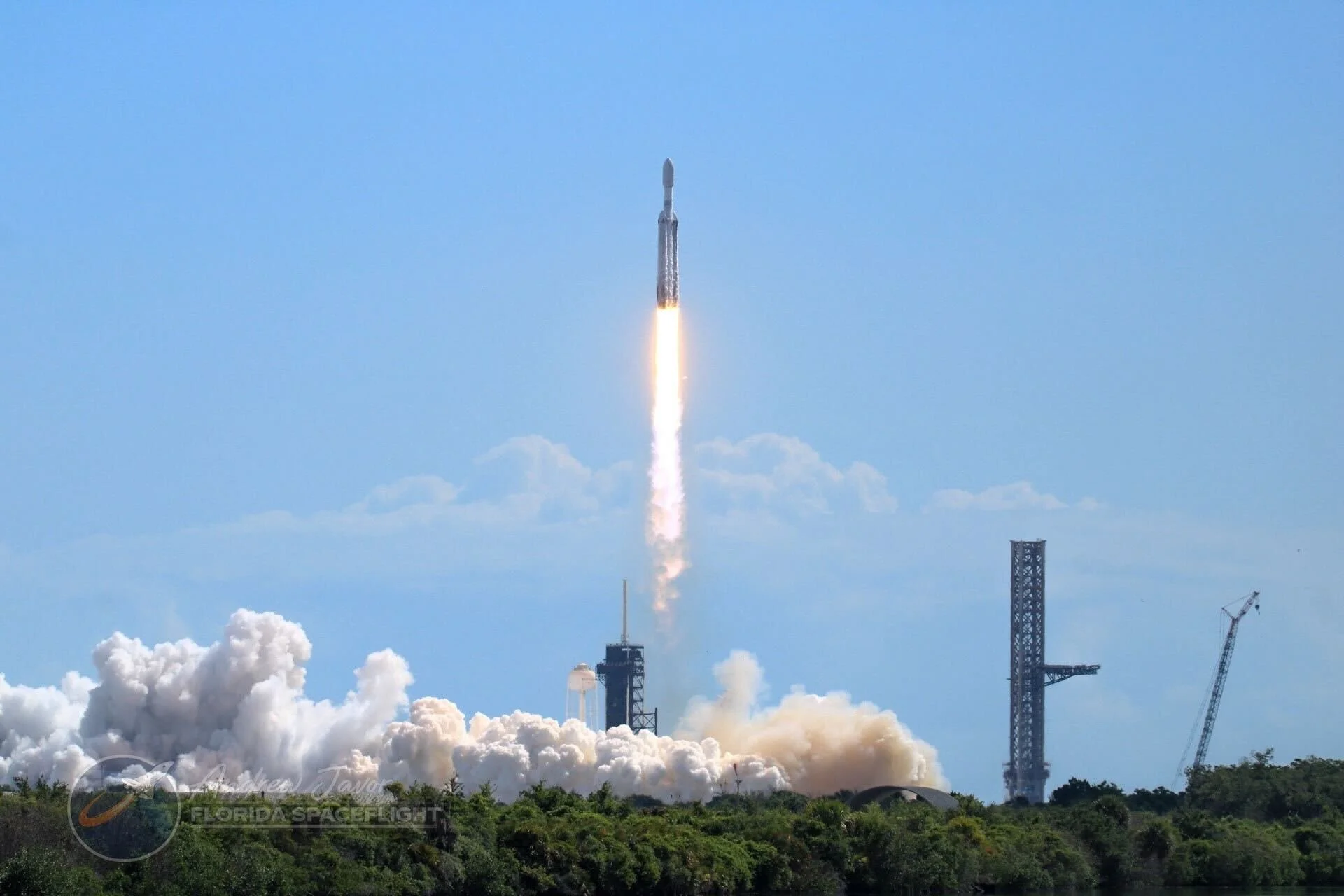
SpaceX Falcon Heavy Rocket launches from LC-39A. Photo: Andrew Javor/Florida Spaceflight
Kennedy Space Center, Florida — SpaceX successfully launched the ViaSat-3 F3 communications satellite aboard a Falcon Heavy rocket on April 29, marking the completion of ViaSat’s next-generation global broadband constellation. Liftoff occurred at 10:13 a.m. EDT from Launch Complex 39A at NASA’s Kennedy Space Center after a brief delay earlier in the week due to weather.
The mission sent the approximately 6-metric-ton satellite toward a geostationary transfer orbit, where it will eventually take up position to provide high-capacity internet coverage across the Asia-Pacific region. ViaSat-3 F3 is the third and final satellite in the ViaSat-3 series, following earlier launches that established coverage over the Americas and Europe, the Middle East, and Africa.
Falcon Heavy, SpaceX’s most powerful operational rocket, performed as expected during ascent. The vehicle’s two side boosters separated a few minutes after liftoff and returned to Cape Canaveral Space Force Station for landing, touching down at Landing Zones 1 and 2. The center core continued downrange to complete the mission, expending its remaining propellant to deliver the satellite to the required trajectory.
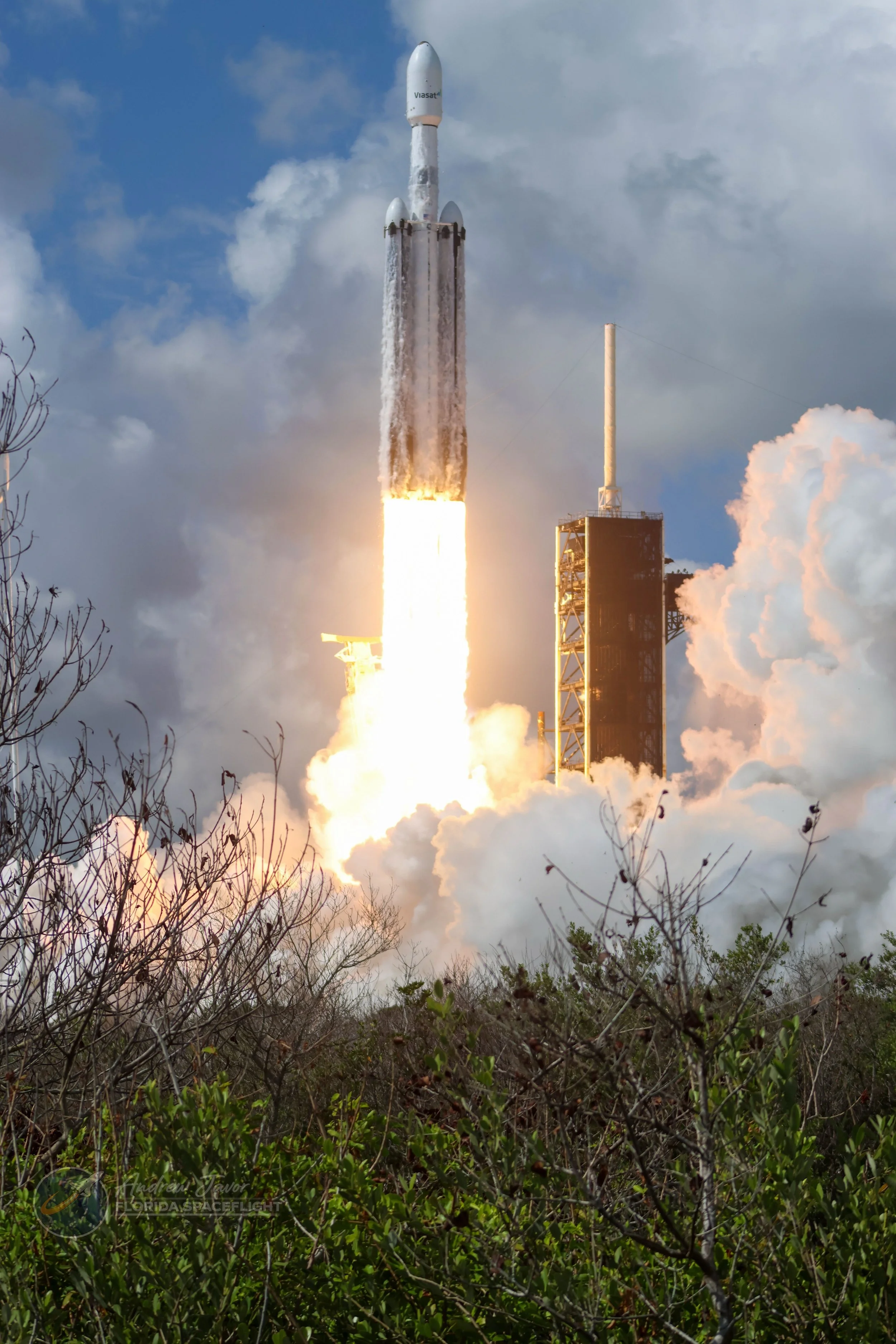
SpaceX Falcon Heavy Rocket launches from LC-39A. Photo: Andrew Javor/Florida Spaceflight
The successful launch represents a significant milestone for ViaSat, which has invested heavily in the ViaSat-3 program to expand its presence in the competitive satellite communications market. Each satellite in the constellation is designed to deliver multi-terabit capacity, enabling faster internet speeds and improved connectivity in underserved and remote regions.
ViaSat-3 F3 will undergo a series of orbit-raising maneuvers over the coming weeks, using its onboard propulsion system to circularize its orbit approximately 35,786 kilometers above Earth. Once in its final geostationary position, the spacecraft will begin deployment of its large communications antennas and solar arrays before entering commercial service following on-orbit testing.
The Falcon Heavy launch also underscores the rocket’s role in supporting high-mass payloads that exceed the performance envelope of SpaceX’s Falcon 9. While Falcon 9 remains the company’s workhorse vehicle, Falcon Heavy is reserved for missions requiring additional lift capability, particularly those targeting geostationary orbit or deep space destinations.
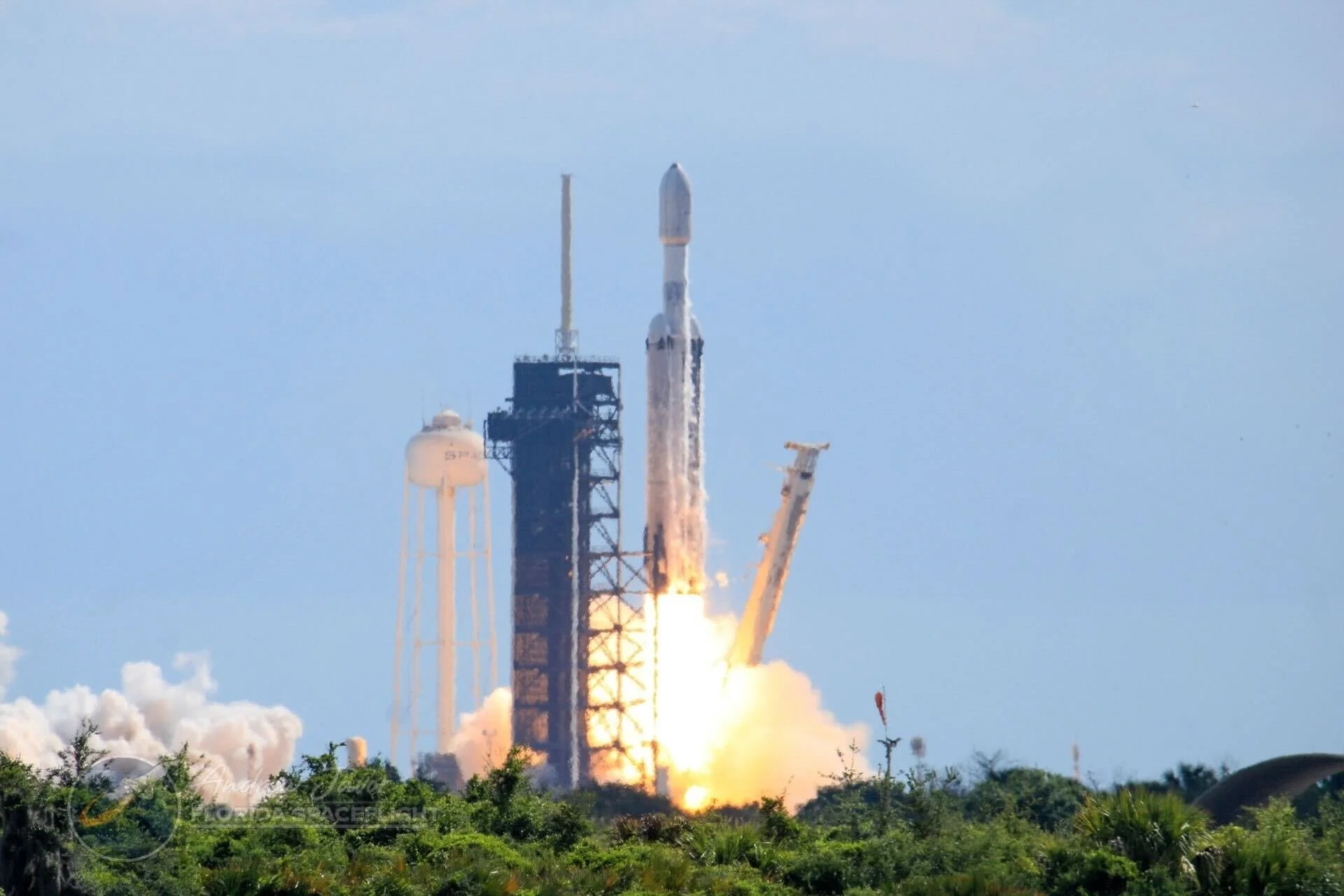
SpaceX Falcon Heavy Rocket launches from LC-39A. Photo: Andrew Javor/Florida Spaceflight
This mission marked one of the relatively infrequent Falcon Heavy flights in recent years, highlighting its continued importance for commercial and government customers with demanding payload requirements. SpaceX has demonstrated the rocket’s versatility through a mix of national security, interplanetary, and commercial missions.
The completion of the ViaSat-3 constellation positions the company to deliver near-global coverage using a smaller number of high-capacity satellites, in contrast to the growing number of low Earth orbit constellations operated by competitors. The system is expected to play a key role in expanding broadband access while supporting aviation, maritime, and enterprise customers.
With ViaSat-3 F3 now on its way to orbit, SpaceX continues to maintain a steady launch cadence from Florida’s Space Coast. The company is expected to conduct additional Falcon 9 missions in the coming weeks, with future Falcon Heavy flights scheduled as customer demand requires.