
NASA Advances Artemis III Toward 2027 Flight as Hardware Takes Shape at Kennedy
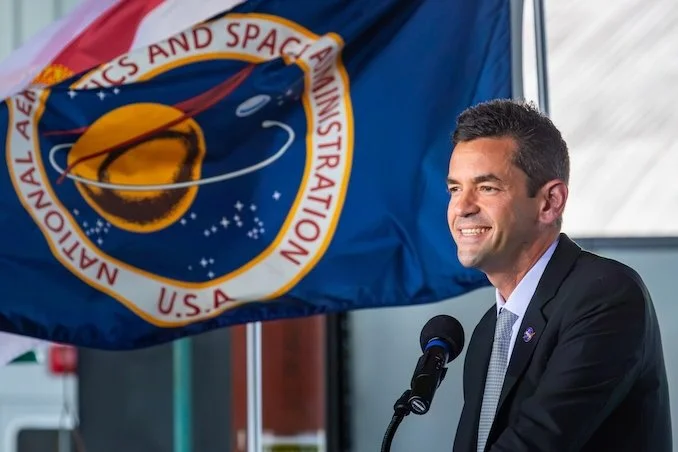
The crewed demonstration will test Orion rendezvous and docking with commercial lunar lander hardware ahead of NASA's planned Artemis IV lunar landing.
KENNEDY SPACE CENTER, Fla. — NASA is moving ahead with preparations for Artemis III, a crewed demonstration mission targeted for 2027 that will launch four astronauts from Kennedy Space Center and test critical systems needed before astronauts return to the lunar surface.
Unlike earlier plans that called for Artemis III to land astronauts near the lunar South Pole, NASA's revised architecture will use the mission as a complex test flight in low Earth orbit. The mission is intended to demonstrate rendezvous and docking between NASA's Orion spacecraft and test versions of commercial human landing systems being developed by SpaceX and Blue Origin.
NASA has assigned Randy Bresnik as commander, European Space Agency astronaut Luca Parmitano as pilot, and NASA astronauts Andre Douglas and Frank Rubio as mission specialists. Bob Hines was named as the backup crew member.
At Kennedy, hardware for the mission is already moving through processing. Engineers joined the Artemis III Orion crew and service modules July 30 inside the Neil A. Armstrong Operations and Checkout Building. The combined spacecraft will undergo power-on and integrated testing as technicians continue final hardware installations.
Work is also progressing on the Space Launch System rocket. Solid rocket booster hardware is being inspected and prepared at Kennedy while other SLS components continue processing at NASA facilities around the country.
Artemis III will launch aboard SLS from Launch Complex 39B. After reaching low Earth orbit, the crew will conduct Orion systems checkouts before attempting rendezvous and docking operations with test articles representing the commercial landers NASA intends to use during later lunar missions.
The flight represents a major increase in operational complexity for Artemis. Instead of relying on a single launch, NASA will coordinate multiple spacecraft and launch campaigns involving Orion, SpaceX's Starship human landing system and Blue Origin's Blue Moon architecture.
The mission will also allow NASA to gather additional data on Orion's life-support systems and docking hardware. Orion is expected to remain in space longer than it did during Artemis II, giving engineers another opportunity to evaluate the spacecraft with astronauts aboard before committing crews to more demanding lunar operations.
Artemis III follows the successful Artemis II mission, which carried astronauts around the Moon earlier this year. NASA now intends to use the 2027 flight as the final major integrated demonstration before Artemis IV, currently planned as the first crewed landing near the lunar South Pole under the revised architecture.
Processing at Kennedy will continue throughout the remainder of 2026 and into next year as NASA prepares Orion, SLS and ground systems for the mission. The schedule will also depend on progress by SpaceX and Blue Origin as both companies develop the lander hardware needed for the increasingly complex Artemis campaign.