
NASA’s Nancy Grace Roman Space Telescope launches aboard Falcon Heavy
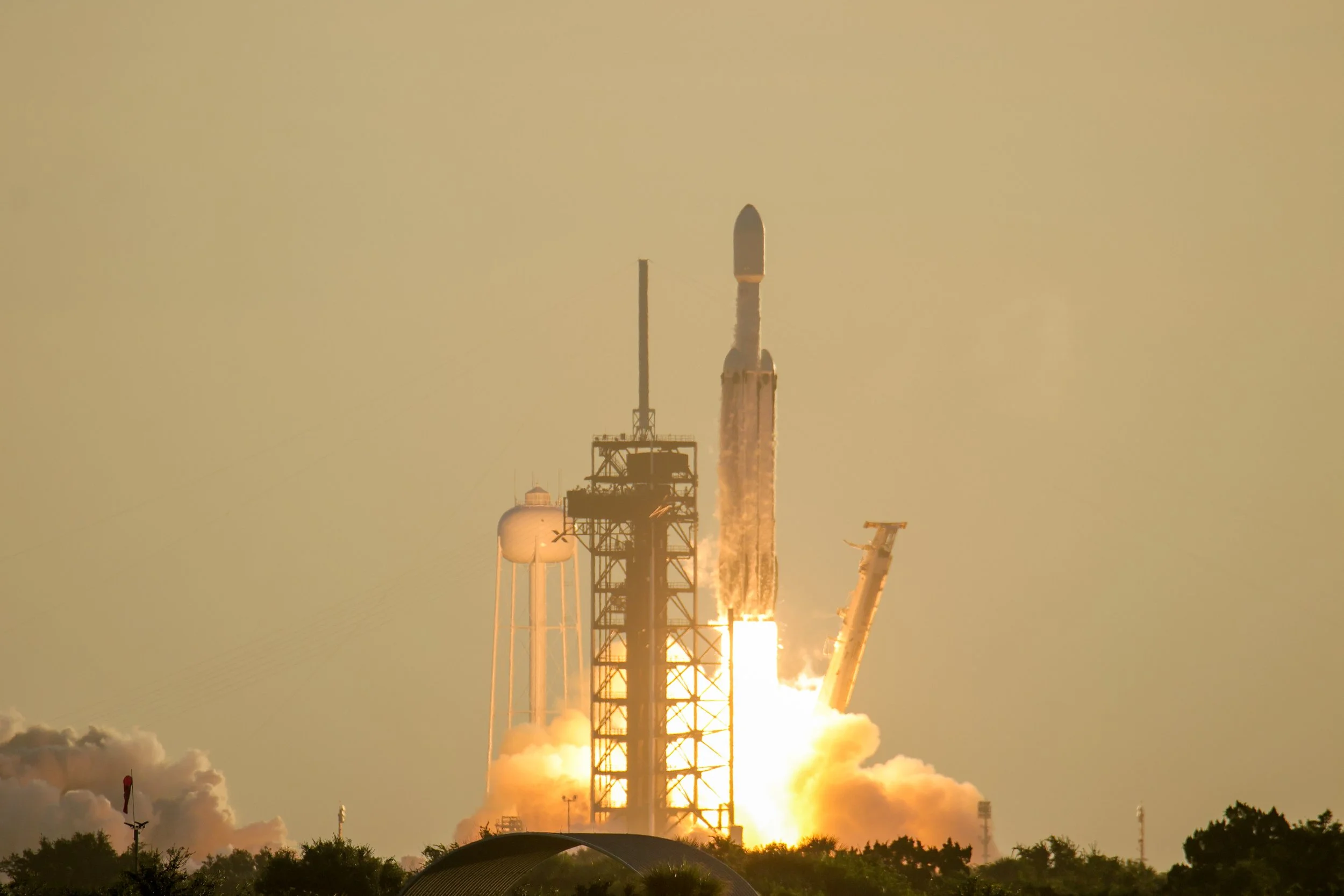
SpaceX’s Falcon Heavy Rocket launches on time at 7:26am, lifting the Nancy Grace Roman Space Telescope into Orbit. Photo: Andrew Javor/Florida Spaceflight
The observatory began a three-month journey to its operating orbit, where it will study dark energy, dark matter and distant worlds.
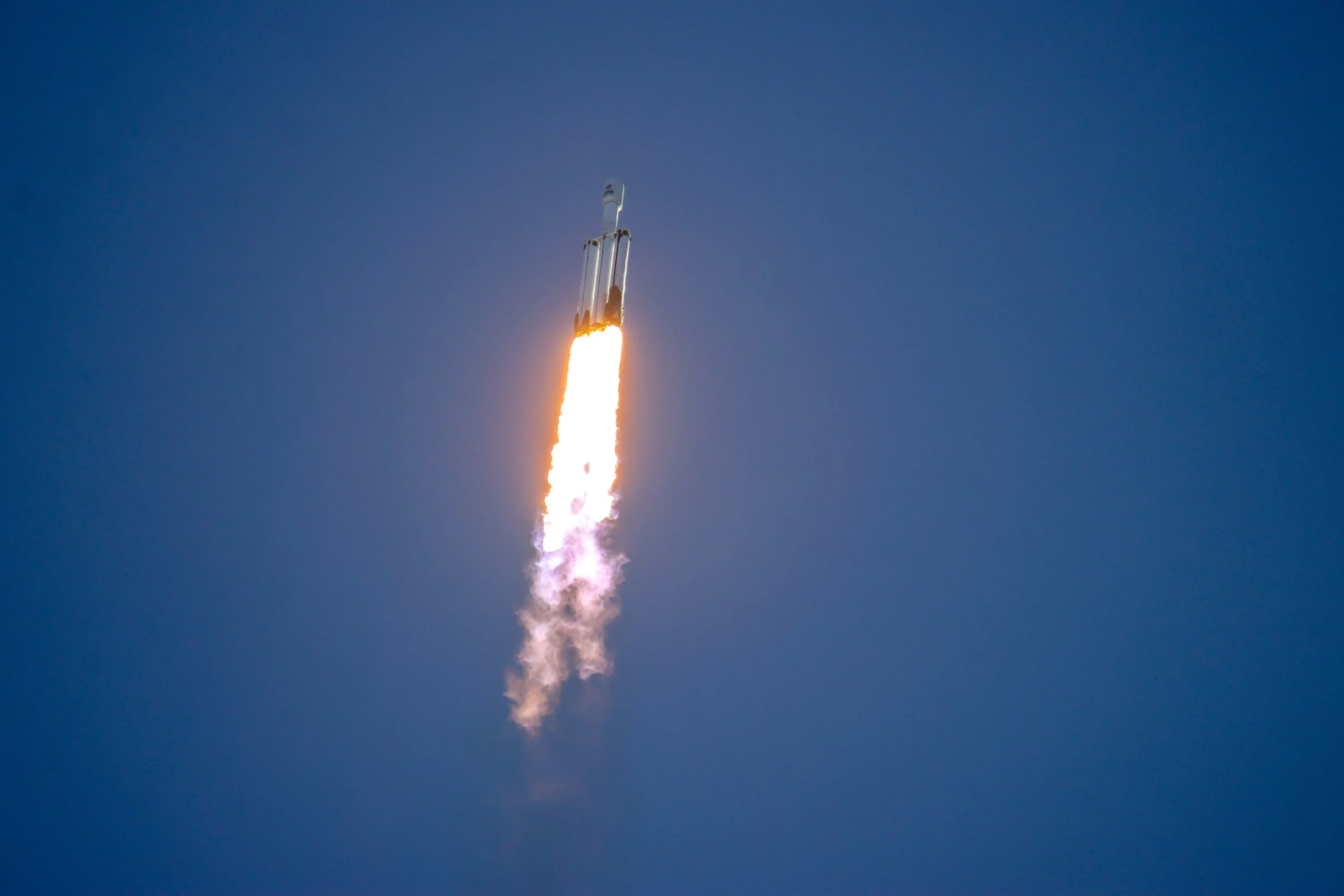
KENNEDY SPACE CENTER, Fla. — NASA’s Nancy Grace Roman Space Telescope launched Sunday morning aboard a SpaceX Falcon Heavy, beginning a million-mile journey that will position the observatory for an expansive survey of the infrared universe.
The rocket lifted off from Launch Complex 39A at Kennedy Space Center at 7:26 a.m. EDT on Aug. 30. Falcon Heavy’s two side boosters separated during ascent and returned to Cape Canaveral, touching down nearly simultaneously for possible reuse.
NASA’s ground team at Goddard Space Flight Center in Maryland received telemetry from Roman about seven minutes after liftoff. The spacecraft separated from Falcon Heavy’s upper stage 31 minutes into the mission, completing the launch phase of its trip toward the second Sun-Earth Lagrange point, known as L2.
Roman will operate about 1 million miles from Earth, in the same general region of space used by NASA’s James Webb Space Telescope. The gravitational environment near L2 allows an observatory to remain aligned with Earth and the sun while maintaining the stable conditions needed for sensitive astronomical observations.
Controllers confirmed deployment of Roman’s solar panels and lower instrument sunshade 83 minutes after launch. Additional early operations include deploying the spacecraft’s high-gain antenna and aperture cover, conducting the first of two planned trajectory corrections and powering on its Coronagraph Instrument.
The coronagraph is a technology demonstration designed to suppress the light from nearby stars, allowing Roman to directly image large exoplanets similar to Jupiter. Lessons from the instrument could help shape future observatories designed to search for potentially habitable worlds.
Roman’s primary science payload is the Wide Field Instrument, a 300-megapixel infrared camera equipped with 18 detectors. The instrument will combine image sharpness comparable to the Hubble Space Telescope with a field of view roughly 100 times larger, allowing Roman to survey large sections of the sky far more quickly.
NASA expects the mission to investigate two of the largest unresolved questions in modern cosmology: the nature of dark matter and the cause of the universe’s accelerating expansion, commonly attributed to dark energy. Roman will also conduct a census of exoplanets using gravitational microlensing, a technique that detects how the gravity of a foreground star and its planets bends and magnifies light from a more distant star.
“Roman will give us a new atlas of the universe,” NASA Administrator Jared Isaacman said following the launch.
The observatory is expected to return approximately 1.4 terabytes of data each day, the highest daily data rate yet planned for a NASA astrophysics mission. Its surveys are intended to create broad astronomical datasets that can support research well beyond Roman’s primary science objectives.
Roman is named for Nancy Grace Roman, NASA’s first chief astronomer and a central figure in the early development of space-based astronomy. The telescope is managed by Goddard, with participation from NASA’s Jet Propulsion Laboratory, Caltech/IPAC and the Space Telescope Science Institute. International contributions were supplied by ESA, Japan’s JAXA, France’s CNES and Germany’s Max Planck Institute for Astronomy.
The launch marked NASA’s fourth primary mission to fly aboard Falcon Heavy. NASA and SpaceX moved the mission forward after the observatory completed development ahead of schedule.
Roman will spend approximately three months traveling to L2 and completing its commissioning program. Engineers will activate the Wide Field Instrument several weeks into the flight before beginning a series of calibrations and performance tests. NASA expects to release the observatory’s first images in early 2027.