
NASA Looks for New Launch Option for Blue Origin Moon Landers After New Glenn Explosion
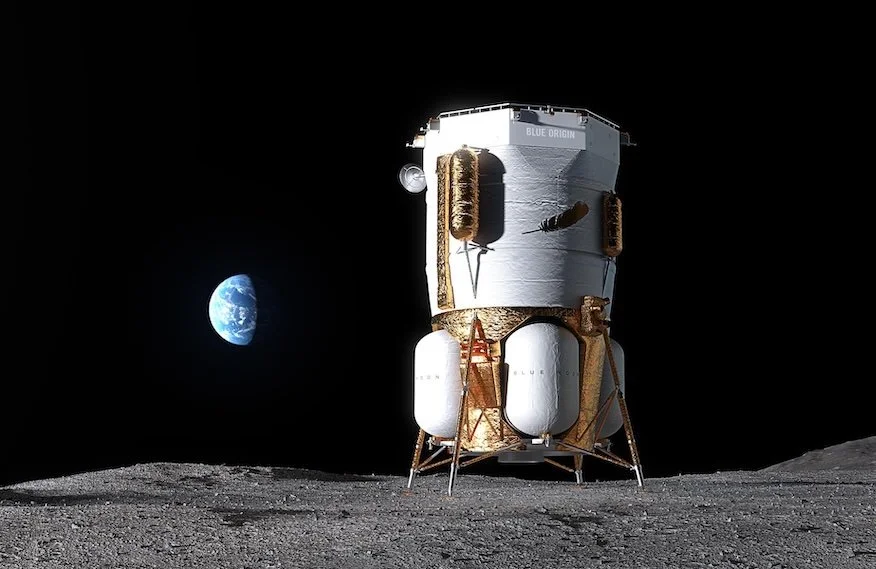
An artist’s rendering of Blue Origin’s Blue Moon Mark 1 lunar lander on the surface of the Moon. Graphic: Blue Origin
The move comes as NASA works to protect its Artemis timeline following major damage at Blue Origin’s Launch Complex 36 in Cape Canaveral.
CAPE CANAVERAL, Fla. — NASA is evaluating whether Blue Origin’s Blue Moon lunar landers should launch on a vehicle other than New Glenn after a major explosion damaged the company’s Launch Complex 36 pad at Cape Canaveral Space Force Station.
NASA Administrator Jared Isaacman said the agency is working to separate the lander program from the status of Blue Origin’s heavy-lift rocket and launch pad. In an interview with FOX Business, Isaacman said NASA is “de-coupling the lander from the launch vehicle and the pad itself,” a move aimed at keeping Blue Moon development on track for upcoming Artemis missions.
The shift follows the May 28 explosion of a New Glenn rocket during prelaunch testing at LC-36. The blast destroyed the vehicle and its transporter-erector and caused visible damage to pad structures. Space Launch Delta 45 commander Col. Brian Chatman described it as the largest explosion he had seen at Cape Canaveral Space Force Station, according to Spaceflight Now. No injuries or fatalities were reported.
Blue Origin CEO Dave Limp said the company still expects New Glenn to fly again before the end of the year. Limp said the pad’s propellant tanks and a nearby processing hangar came through the incident in good condition, while the main support tower can be repaired in place. “We will fly again before the end of this year,” Limp wrote.
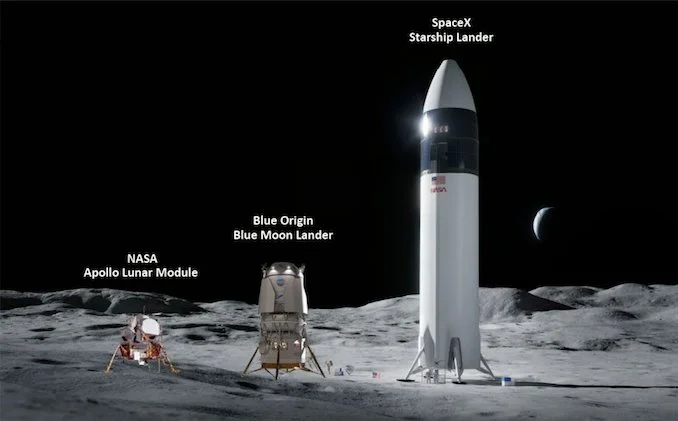
An artist’s impression of an Apollo-era lunar module (left) and moon landers being built by Blue Origin (center) and SpaceX (right). Graphic: NASA Office of Inspector General
The timing of the mishap is significant for NASA’s Artemis program. Blue Origin’s Blue Moon Mark 1 lander is designed to deliver cargo to the lunar surface, including equipment tied to NASA’s early Moon Base planning. The larger Blue Moon Mark 2 is being developed as a crewed lunar lander for later Artemis missions.
NASA wants the Mark 2 lander, along with SpaceX’s Starship-based lunar lander, to demonstrate rendezvous and docking with Orion ahead of future astronaut landings. Isaacman has said the agency is focused on returning astronauts to the lunar surface before 2028 and using 2027 test missions to reduce risk before a landing attempt.
Finding another rocket for Blue Moon may not be simple. Blue Origin designed the landers around New Glenn’s large payload capacity and seven-meter fairing. Falcon Heavy, currently the only other operational U.S. heavy-lift rocket flying regularly, uses a smaller 5.2-meter fairing, and SpaceX’s launch pads are not currently configured to support a hydrogen-fueled payload like Blue Moon.
That creates a difficult technical and schedule problem for NASA and Blue Origin. Keeping the lander on New Glenn could tie Artemis milestones to the pace of pad repairs and the New Glenn mishap investigation. Moving the lander to another vehicle could require design, integration and ground support changes that may also affect the schedule.
The incident also comes as Blue Origin is trying to increase New Glenn’s launch cadence from Florida. The rocket is central to the company’s commercial manifest, Amazon satellite launches and NASA lunar work. Blue Origin has said the damaged pad infrastructure is repairable, but the company still must complete its investigation and demonstrate the vehicle can safely return to flight.
NASA officials are expected to continue working with Blue Origin while assessing backup launch options for Blue Moon. The next several months will be critical for determining whether the lander can remain aligned with Artemis test objectives in 2027 and NASA’s broader goal of returning astronauts to the Moon before the end of the decade.