
SpaceX Launches First Starfall Reentry Capsule Demo from Cape Canaveral
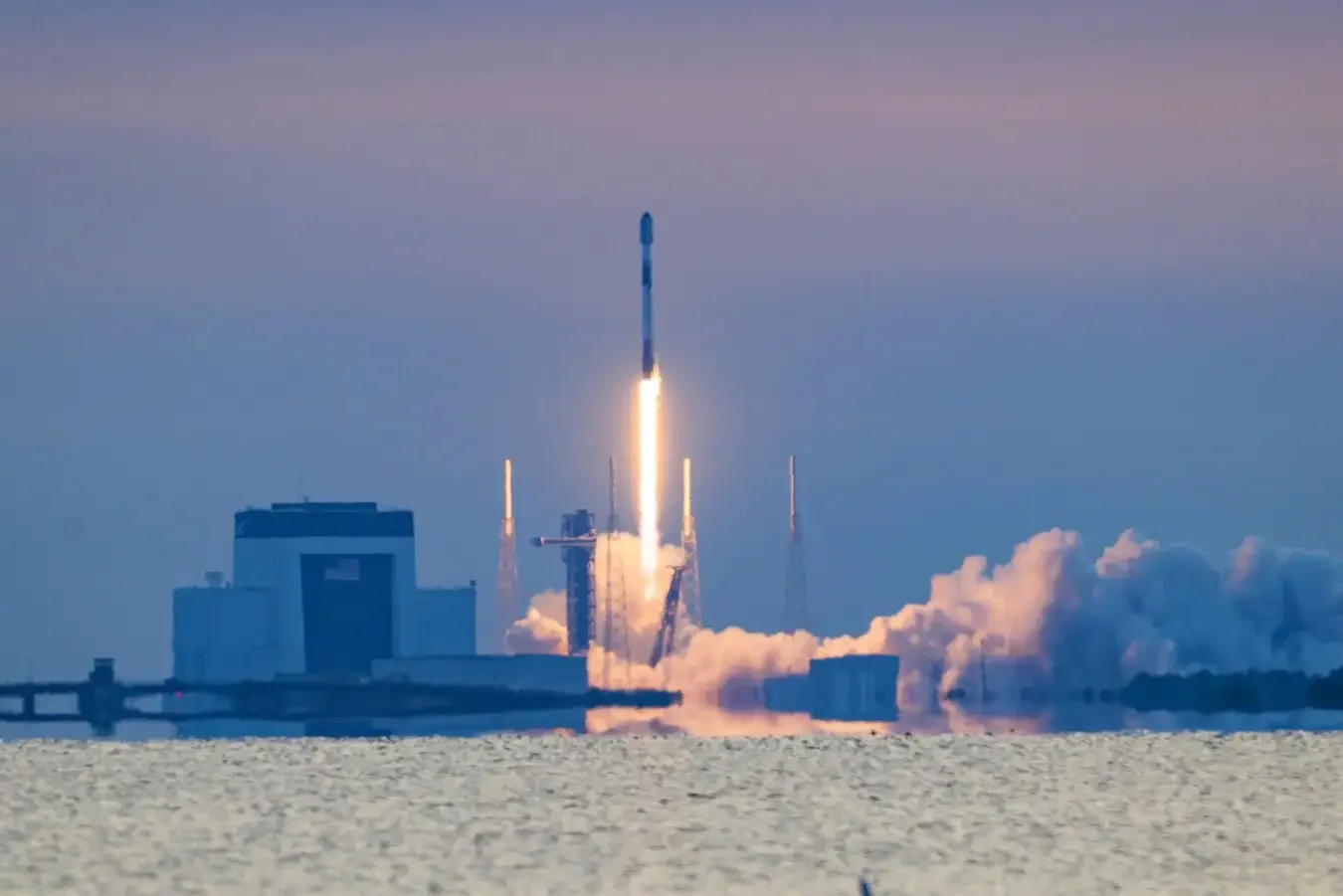
Cape Canaveral, Florida — SpaceX launched the first demonstration flight of its new Starfall reentry capsule Tuesday morning, sending the uncrewed spacecraft into orbit aboard a Falcon 9 rocket from Cape Canaveral Space Force Station.
The Falcon 9 lifted off from Space Launch Complex 40 at 6:53 a.m. EDT, climbing into a clear early morning sky over Florida’s Space Coast. SpaceX later confirmed deployment of the Starfall capsule at 10:01 a.m. EDT, completing a key early milestone for a vehicle the company has said is intended to support routine access to microgravity and safe return of payloads from space.
The mission introduced a new spacecraft in SpaceX’s growing portfolio of orbital systems, joining Starlink, Starshield, Dragon and Starship-related development efforts. Unlike Dragon, Starfall is not designed for crews. It is a compact reentry vehicle intended to carry experiments, manufactured materials or other cargo back through Earth’s atmosphere.
SpaceX provided only limited public details about the mission profile. During its launch webcast, the company did not show views of the upper stage or the Starfall payload after ascent, and its public mission timeline ended shortly after the booster landing. The company has not disclosed whether customer payloads were aboard the demonstration flight or how long the capsule is expected to remain in orbit.
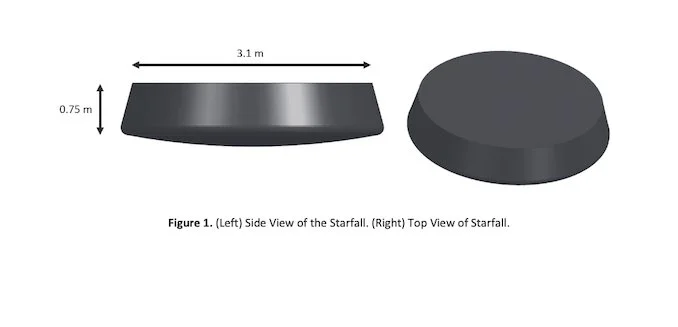
Federal Aviation Administration environmental documents published ahead of the mission offer the clearest look at Starfall’s intended role. The vehicle is described as a cylindrical capsule about 2.5 feet tall and roughly 10 feet wide, with the ability to carry up to about 2,200 pounds of payload. The FAA review said SpaceX proposed two Starfall reentries to demonstrate capabilities for future transportation and delivery of goods through space.
The system is aimed at two related markets: returning material from microgravity and vacuum environments for research or in-space manufacturing, and demonstrating rapid cargo delivery through space. SpaceX wrote on X that the mission included “a demo of a new vehicle that will enable affordable, routine access to the microgravity environment for scientific research and in-space manufacturing.”
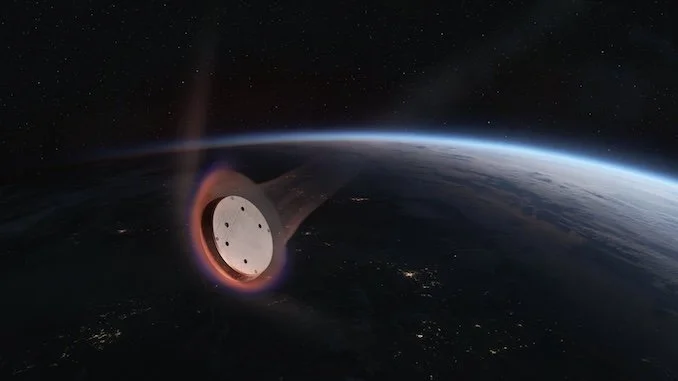
Starfall does not have a main propulsion system, according to the FAA documentation. Instead, it uses an attitude control system with inert gas to orient the capsule before reentry. The vehicle is expected to use a heat shield for atmospheric entry, then deploy a parachute system for splashdown and recovery in the Pacific Ocean.
The launch also continued SpaceX’s high-tempo reuse operations from Florida. The Falcon 9 first stage, booster B1078, flew for the 29th time. Its previous missions included NASA’s Crew-6 astronaut launch, USSF-124 and SES’ O3b mPOWER-B mission. Nearly nine minutes after liftoff, the booster landed on the drone ship A Shortfall of Gravitas in the Atlantic Ocean.
Weather was favorable for the early morning launch attempt, with the 45th Weather Squadron forecasting a 95 percent chance of acceptable conditions. The only noted concern was a small chance of violating the cumulus cloud rule.
While SpaceX has not announced a full operational schedule for Starfall, the demonstration could signal a new phase in the company’s work beyond launch services. If successful, Starfall would give SpaceX another reusable or repeatable transportation product, this time focused not on carrying satellites to orbit, but on bringing cargo safely back to Earth.
The next major milestone will be the capsule’s reentry and recovery. SpaceX has not publicly announced the timing of that event, but the outcome will help determine how quickly Starfall can move from a demonstration vehicle toward regular service for research, manufacturing and future cargo-return missions.