
SpaceX Launches Three AST SpaceMobile BlueBird Satellites From Cape Canaveral
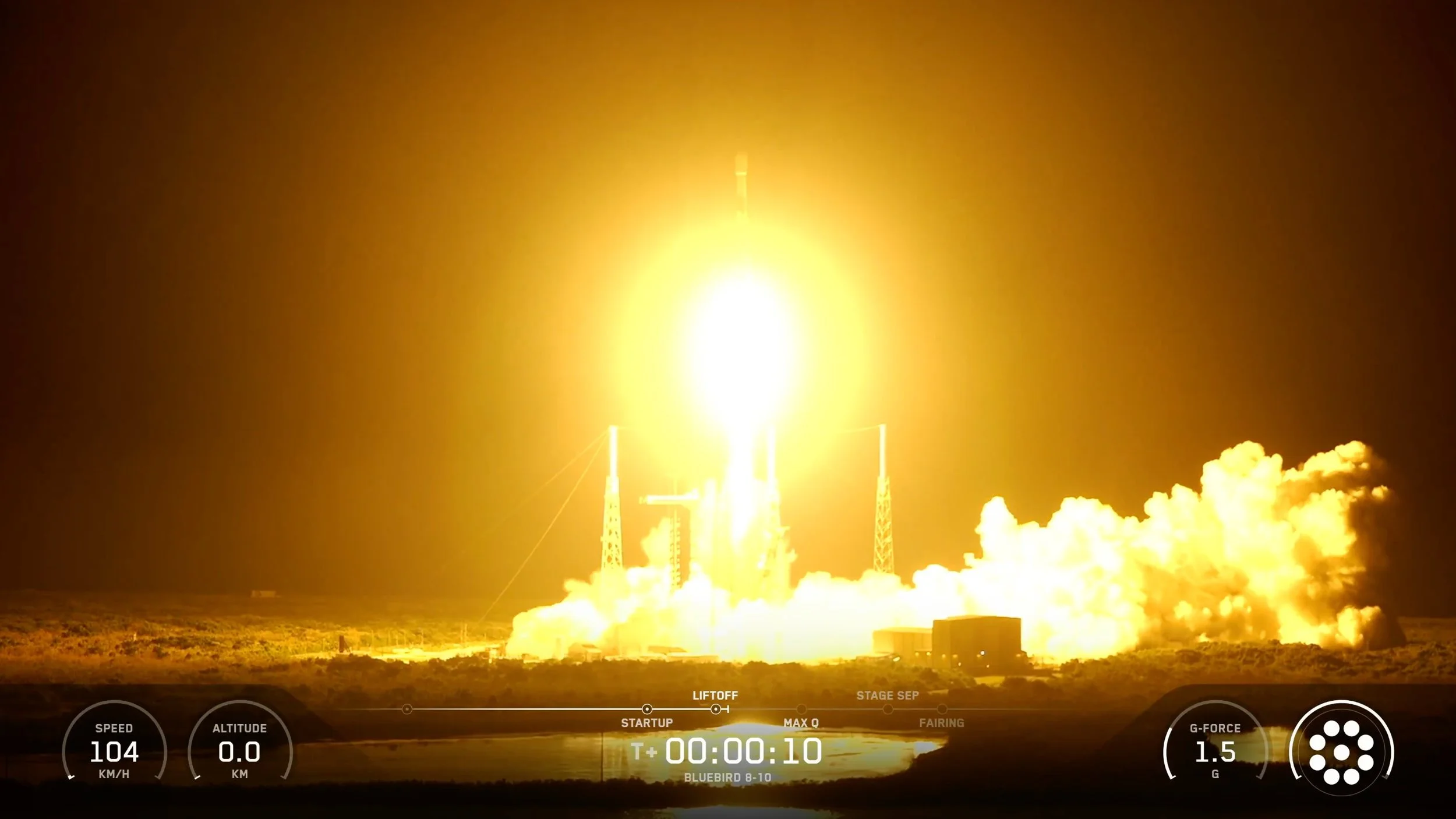
BlueBird 11, 12 and 13 expand AST SpaceMobile's next-generation direct-to-device communications constellation.
CAPE CANAVERAL, Fla. — SpaceX launched three next-generation AST SpaceMobile communications satellites from Cape Canaveral Space Force Station early Aug. 5, continuing the deployment of a constellation designed to provide cellular broadband service directly to standard mobile devices.
A Falcon 9 lifted off from Space Launch Complex 40 at 3:49 a.m. EDT carrying BlueBird 11, 12 and 13 into low Earth orbit.
The flight used Falcon 9 first-stage booster B1077, which was making its 30th launch. The veteran booster previously supported missions including Crew-5, GPS III Space Vehicle 06, CRS-28, Northrop Grumman's NG-20 mission and the June launch of BlueBird 8, 9 and 10.
Following stage separation, B1077 completed another recovery aboard the drone ship A Shortfall of Gravitas in the Atlantic Ocean.
The three spacecraft are part of AST SpaceMobile's Block 2 BlueBird constellation. The company is developing the network to provide space-based broadband connectivity directly to conventional smartphones, without requiring customers to use specialized satellite phones or external antennas.
AST SpaceMobile has agreements with mobile network operators around the world and plans to use terrestrial cellular spectrum through those partners. In the United States, the company has been working with AT&T and Verizon as it moves toward beta services.
The BlueBird satellites are notable for their exceptionally large phased-array antennas. AST says its next-generation spacecraft are designed to provide substantially greater capacity than its earlier satellites while supporting voice, data and video applications.
The Aug. 5 flight also marked another step in a rapid deployment campaign from Florida.
BlueBird 8, 9 and 10 launched aboard another Falcon 9 from Cape Canaveral on June 17. BlueBird 7 launched aboard Blue Origin's New Glenn from Cape Canaveral in April, while the first next-generation BlueBird spacecraft launched from India in December 2025.
The growing constellation is intended to eventually provide continuous coverage rather than the intermittent service possible with a smaller number of satellites. AST SpaceMobile has said it is targeting dozens of satellites in orbit as it expands commercial service.
For Florida's launch industry, the mission further demonstrated the increasingly diverse commercial payload manifest flying from Space Launch Complex 40, which supports Starlink, commercial communications, national security and NASA missions at a high cadence.
AST SpaceMobile is already preparing additional BlueBird spacecraft for future launches as the company works toward broader commercial service. The date and launch provider for the next deployment have not yet been announced.