
SpaceX Launches Classified NROL-95 Mission From Cape Canaveral
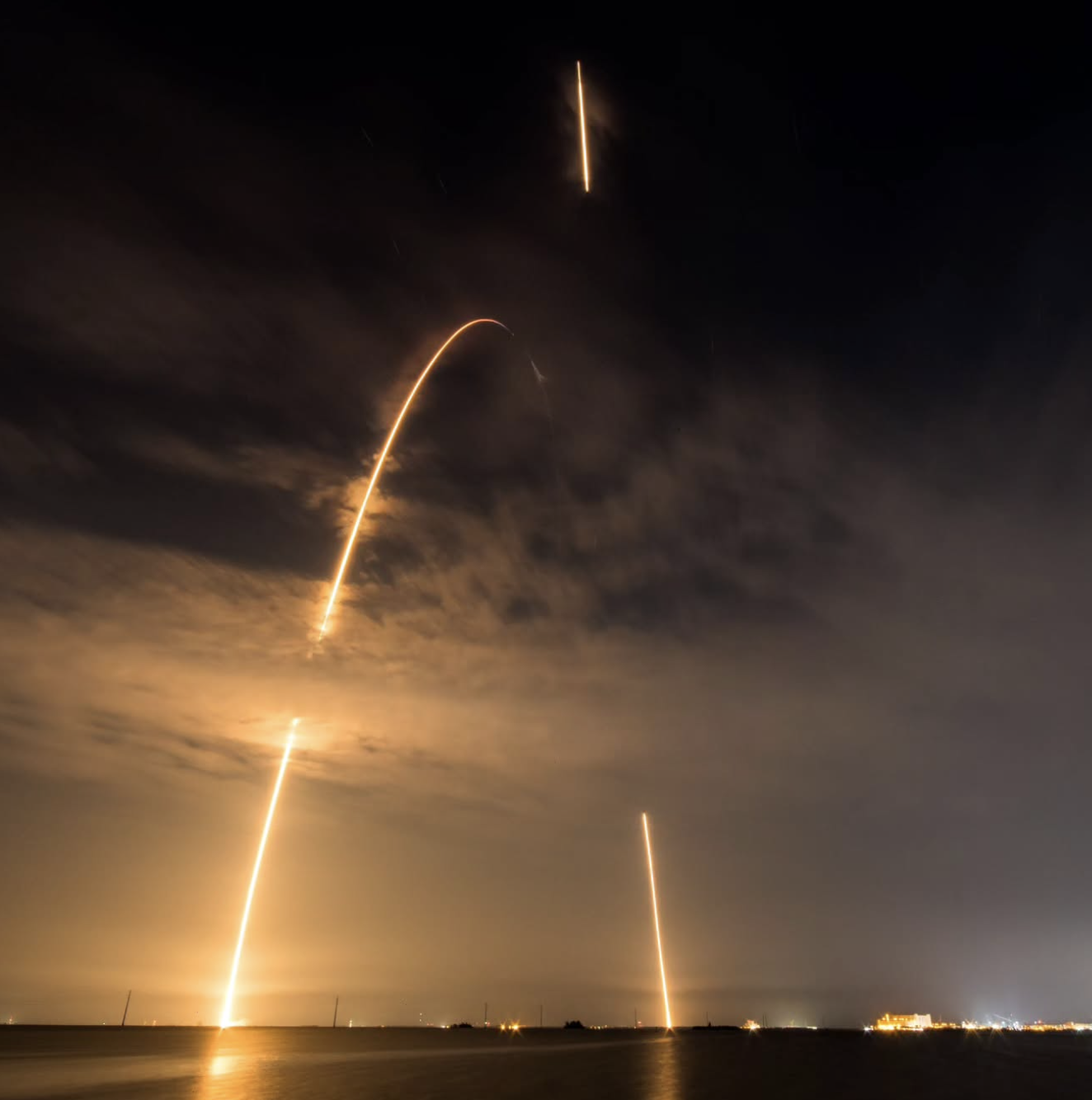
Long Exposure shot of the launch and landing of the Falcon 9 Booster during the NROL-95 mission; Photo: Eric Pearce/Florida Spaceflight
Falcon 9 returned to the Space Coast following a predawn national security launch for the National Reconnaissance Office.
CAPE CANAVERAL, Fla. — SpaceX launched a classified payload for the National Reconnaissance Office from Cape Canaveral Space Force Station on July 30, sending the NROL-95 mission into orbit aboard a Falcon 9 rocket.
The rocket lifted off from Space Launch Complex 40 during the predawn hours, beginning another national security mission from Florida's Space Coast.
As is customary for many NRO missions, details about the spacecraft, its intended orbit and its capabilities were not publicly disclosed.
NROL-95 was procured under the U.S. Space Force's National Security Space Launch Phase 2 program, through which SpaceX and United Launch Alliance provide launch services for high-priority military and intelligence payloads.
The Falcon 9 first stage supporting the mission, B1096, was making its seventh flight.
Rather than heading to an offshore drone ship following stage separation, the booster reversed course and returned to Cape Canaveral. It touched down at Landing Zone 2 several minutes after launch.
Return-to-launch-site landings require the booster to reserve propellant for a boostback burn that redirects the stage toward Florida, followed by entry and landing burns during its descent.
The maneuver also produces sonic booms that can be heard across portions of Florida's Space Coast as the booster travels through the atmosphere at supersonic speeds.
The mission continued SpaceX's expanding role in launching payloads for the U.S. national security community. Falcon 9 and Falcon Heavy have become regular vehicles for Space Force and intelligence missions, complementing United Launch Alliance's Atlas V and Vulcan rockets.
The National Reconnaissance Office operates the nation's fleet of intelligence-gathering satellites, supporting missions ranging from national security to military operations and disaster response. Specific spacecraft capabilities generally remain classified.
Space Launch Complex 40 has evolved into one of the busiest launch pads in the world, supporting SpaceX's Starlink constellation alongside commercial, civil and national security missions.
NROL-95 added another flight to that manifest while demonstrating one of Falcon 9's less frequently seen mission profiles on the Space Coast: launching a classified national security payload and returning the first stage directly to Florida.
SpaceX will continue supporting national security missions from both Florida and California as the Space Force and intelligence community increasingly rely on commercial launch providers to place spacecraft into orbit.