
New Glenn’s Third Flight Falls Short as Payload Fails to Reach Intended Orbit
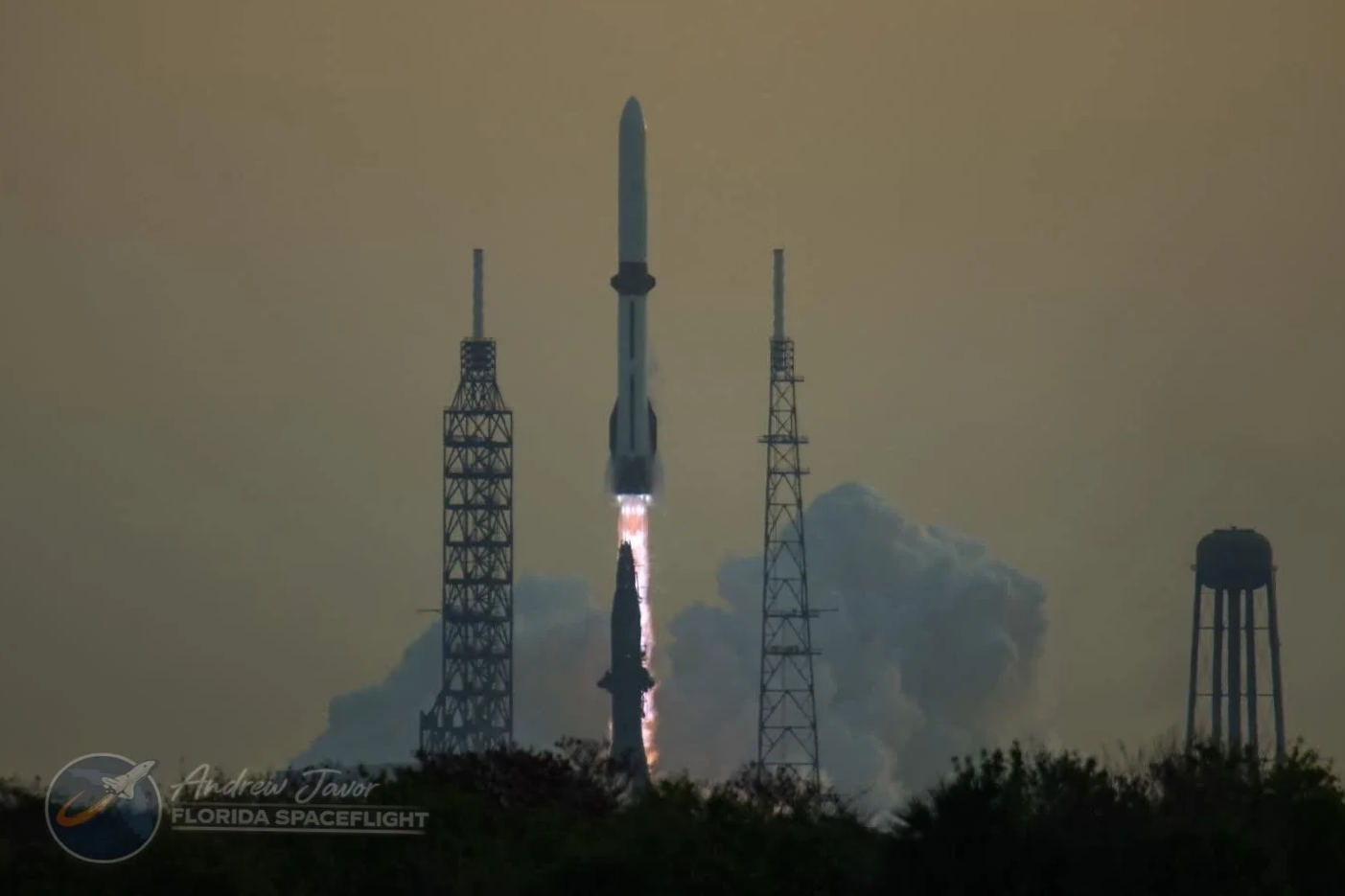
Blue Origin’s New Glenn rocket launches from Cape Canaveral Space Force Station at 7:25 AM EST. Photo: Andrew Javor/Florida Spaceflight
Cape Canaveral, Florida — Blue Origin launched its third New Glenn rocket from Florida’s Space Coast, successfully reaching space but falling short of mission objectives after the payload failed to reach its intended orbit.
The rocket lifted off without issue, with early phases of flight proceeding as expected. The first stage performed nominally, and the upper stage ignited to carry the payload toward orbit. However, during the critical orbital insertion phase, the vehicle did not achieve the planned velocity and trajectory, leaving the payload in an orbit lower than required for its mission.
Officials indicated that while the payload did reach orbit, it was not the correct one, effectively preventing it from completing its intended objectives. Depending on the spacecraft’s onboard propulsion capabilities, recovery options may be limited or nonexistent.
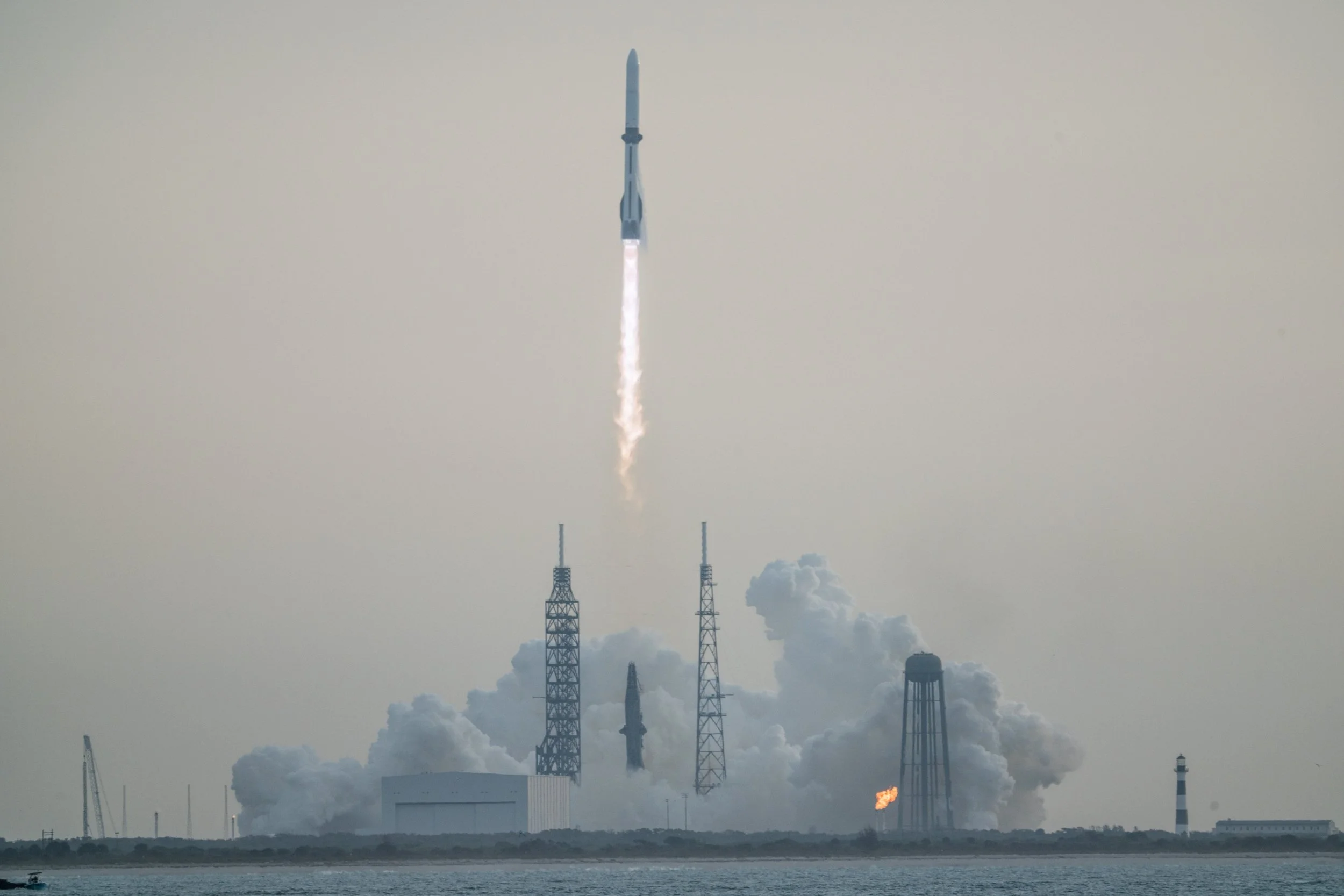
Blue Origin’s New Glenn rocket clears the tower during launch from Cape Canaveral Space Force Station at 7:25 AM EST. Photo: Eric Pearce/Florida Spaceflight
The shortfall appears to be tied to the performance of the upper stage during its final burn. While full details have not yet been released, preliminary information suggests the stage did not deliver the expected impulse needed to place the payload into its target orbit.
New Glenn is central to Blue Origin’s strategy to compete in the heavy-lift launch market, where it faces established providers such as SpaceX and United Launch Alliance. The rocket is designed to deliver payloads to a variety of destinations, including low Earth orbit and higher-energy trajectories, using a reusable first stage and a high-performance upper stage.
This mission was part of an ongoing test campaign aimed at maturing the vehicle for regular operations. Earlier flights demonstrated core launch capabilities, and this third launch was expected to further validate upper stage performance and mission reliability.
Although the mission did not meet its primary objective, the launch still provided valuable flight data. Engineers will analyze telemetry from the ascent and upper stage burn to determine the root cause of the underperformance. Such data is critical in the early operational phase of a new launch vehicle, where real-world flight conditions often reveal issues not encountered during ground testing.
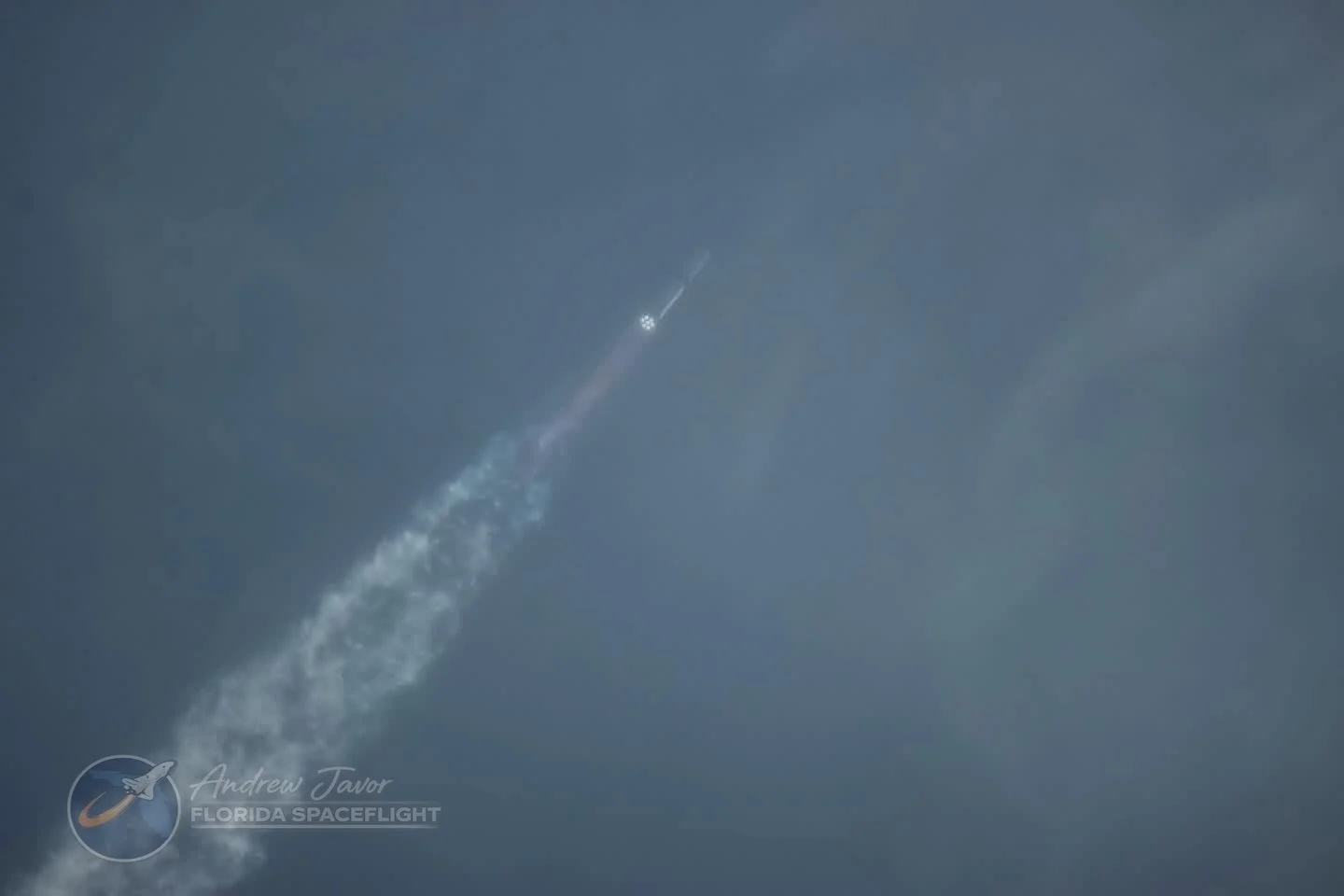
Blue Origin’s New Glenn rocket is breaking through MaxQ during its launch. Photo: Andrew Javor/Florida Spaceflight
The payload, believed to be a commercial satellite, now faces uncertainty regarding its operational future. Being placed into the wrong orbit can significantly impact mission viability, particularly if the spacecraft lacks sufficient propulsion to correct its trajectory.
For Blue Origin, the outcome underscores the challenges of bringing a new heavy-lift rocket online in a competitive market. Reliability is a key factor for both commercial and government customers, and consistent mission success will be necessary for New Glenn to secure long-term launch contracts.
The company has not yet announced when the next New Glenn launch will take place, but an investigation into the anomaly is expected to be completed before flight operations resume. Any required modifications to the upper stage or guidance systems will likely be implemented ahead of the next mission.
Despite the setback, the flight marks continued progress for the New Glenn program, demonstrating successful ascent and partial mission execution. Future launches will be critical as Blue Origin works to achieve full mission success and establish the rocket as a dependable launch vehicle.