
NASA Names Artemis III Crew for 2027 Test Flight From Kennedy Space Center
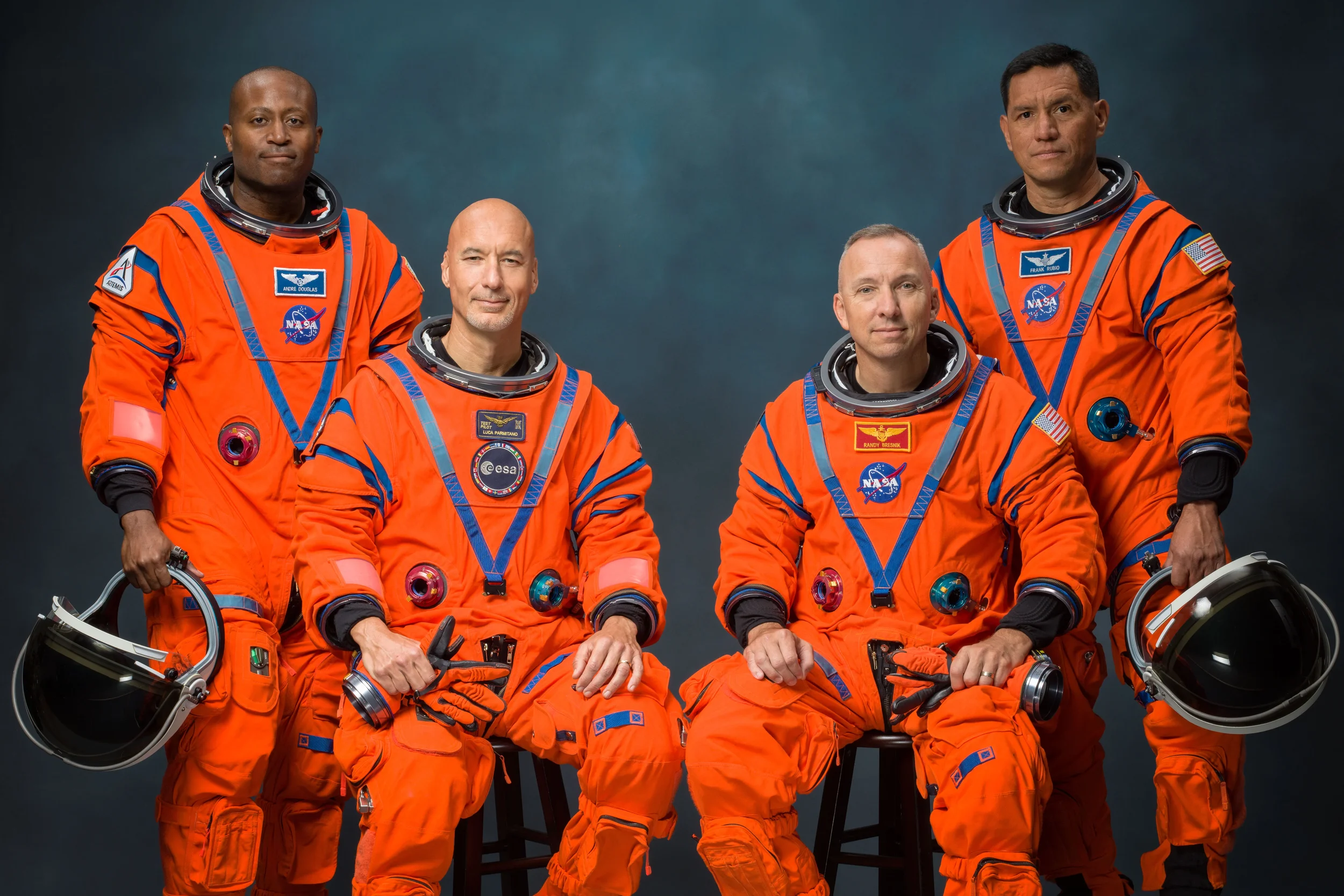
The Artemis III crew poses for an official portrait (from left: Andre Douglas, Luca Parmitano, Randy Bresnik, Frank Rubio). Credit: NASA/Bill Stafford
CAPE CANAVERAL, Fla. — NASA has named the four astronauts who will fly on Artemis III, a 2027 mission from Kennedy Space Center designed to test the complex spacecraft operations needed before the agency returns astronauts to the lunar surface.
The crew will be commanded by NASA astronaut Randy Bresnik, with European Space Agency astronaut Luca Parmitano serving as pilot. NASA astronauts Andre Douglas and Frank Rubio will fly as mission specialists. NASA also named Bob Hines as a backup crew member.
Unlike NASA’s earlier plans that tied Artemis III directly to the first crewed lunar landing of the program, the mission is now structured as an Earth-orbit test flight. The crew will launch aboard NASA’s Space Launch System rocket and Orion spacecraft from Launch Complex 39B at Kennedy Space Center, then demonstrate rendezvous and docking operations with test versions of commercial human landing systems being developed by SpaceX and Blue Origin.
The mission is expected to last about two weeks, though NASA said the final duration will depend on launch timing, rendezvous opportunities and docked operations in orbit.
“Today we take another bold step in humanity’s return to the Moon, building on the extraordinary foundation laid by the Artemis II astronauts,” NASA Administrator Jared Isaacman said in the agency’s announcement. “This mission will require the most awe-inspiring coordination of heavy-lift rocket launches in history.”
NASA said Artemis III will involve a multi-launch campaign using some of the world’s most powerful rockets. Under the current plan, Blue Origin’s lander pathfinder would launch first and remain in orbit for several weeks awaiting Orion. After launch from Florida, Orion would rendezvous and dock with the Blue Origin test article for about two days of checkouts, including crew ingress into the lander.
Orion would then undock and later meet with a SpaceX Starship pathfinder equipped for docking tests. NASA said the Orion crew would spend about a day connected to the Starship test vehicle before undocking and returning to Earth for a Pacific Ocean splashdown.
The flight is intended to reduce risk before Artemis IV, which NASA now identifies as the first planned Artemis mission to land astronauts near the lunar south pole in 2028. Artemis III will test spacecraft interfaces, software, propulsion, communications and procedures that will be required when Orion and a human landing system operate together near the Moon.
“This test flight will enable us to prove we can carry out highly choreographed operations with our commercial partners across hardware interfaces, software, propulsion systems and life support elements with crew in the high-stakes space environment,” Jeremy Parsons, a senior manager in NASA’s Moon to Mars program office, said during the crew announcement event, according to Spaceflight Now.
For Florida, the mission keeps Kennedy Space Center at the center of NASA’s lunar campaign. SLS core stage work, booster processing, Orion integration and mobile launcher preparations are all part of the Artemis III flow. NASA said engineers plan to connect Orion’s crew module and service module this summer and integrate the spacecraft’s docking system, which will fly for the first time on Artemis III.
Rocket processing is also moving ahead. NASA said technicians are integrating the SLS core stage engine section ahead of installing four RS-25 engines this summer. All solid rocket booster segments for the mission are now at Kennedy Space Center, and stacking is scheduled to begin this summer.
The crew brings a mix of spaceflight experience and test backgrounds. Bresnik is a former Marine aviator and two-time spaceflight veteran who has supported Artemis spacecraft and systems development from within NASA’s Astronaut Office. Parmitano, a veteran ESA astronaut and former International Space Station commander, becomes the first European astronaut assigned to an Artemis mission. Rubio will make his second trip to space after setting the U.S. record for the longest single spaceflight by an American, spending 371 days in orbit. Douglas, selected by NASA in 2021, will make his first spaceflight after previously serving as a backup and closeout crew member for Artemis II.
The mission also comes as NASA’s commercial lander providers face significant development milestones. SpaceX continues work on a lunar lander version of Starship, while Blue Origin is developing a crewed version of its Blue Moon lander. Both systems must mature before NASA can attempt a crewed landing at the Moon.
Artemis III will follow the Artemis II mission, which sent astronauts around the Moon and back earlier this year. NASA now plans to use the 2027 flight to validate the docking and integrated operations needed for the next step in the Artemis program: returning astronauts to the lunar surface and establishing a long-term presence near the Moon’s south pole.